

22 min
0
09.05.2025
Key Takeaways
- Most dental hygienists have an associate's degree from an accredited program that takes 2 to 3 years to complete.
- After graduation, you have to pass the NBDHE, which is a clinical examination, and maybe a state jurisprudence test to get your license.
- The average pay is about $81,400 a year; however, this might change depending on where you work, how much experience you have, and how many hours you work.
- The job market is healthy, with a 9% increase projected by 2033. This is because of preventive care and professionals retiring.
- Dental hygienists can work in many different places, such as private offices, public health, schools, and businesses.
- The job lets you choose your own hours, which makes it a good choice for both full-time and part-time work.
- You can move up in your career by getting more degrees, certifications, or taking on more responsibilities.
- You need to be able to communicate clearly, have technical skills, and be able to understand others to do well in this industry.
- Key Takeaways
- What Does a Dental Hygienist Do?
- Duties and Responsibilities
- What Is the Difference Between a Dental Hygienist and a Dental Assistant?
- Areas of Expertise in Dental Hygiene
- Why Do You Want to Be a Dental Hygienist?
- Requirements for Education and Training
- What You Need to Do Before You Can Get into a Dental Hygiene Program
- Programs for Dental Hygiene That Are Accredited
- A Look at the Curriculum
- Clinical Experience in Dental Hygiene
- Different Kinds of Dental Hygienist Degrees
- How Long Does It Take to Get a Job as a Dental Hygienist?
- Pathway to an Associate Degree
- Pathway to a Bachelor's Degree
- Pathway to a Master's Degree
- Dental Hygiene Programs on the Internet
- Licensing and Certification
- Requirements That Are Different in Each State
- Job Demand and Outlook
- Where Do Dental Hygienists Work?
- What a Dental Hygienist Does Every Day
- Skills and Traits Needed to Succeed
- A Normal Work Schedule
- How Much Do Dental Hygienists Earn?
- Opportunities for Career Growth
- Problems in the Field
- Is It Worth It to Become a Dental Hygienist?
- Advice for People Who Want to Be Dental Hygienists
- Questions That Are Asked a Lot
You're not imagining things if you've been hearing more about jobs in dental hygiene lately. As more people get preventative treatment and dental offices grow, the need for skilled dental hygienists is continually rising. In fact, the U.S. The Bureau of Labor Statistics says that jobs will expand by 9% through 2033.
How long does it take to get a job as a dental hygienist? Depending on the path you choose for your study, it usually takes two to four years. Most students get their associate degree in about two years, which is the minimum amount of time needed to get a license.
Some people may go on to get a bachelor's degree, which takes longer but can lead to jobs in teaching, research, and public health. You must pass a national exam and get a license in your state before you may start working in the field after finishing a CODA-accredited program.
What Does a Dental Hygienist Do?
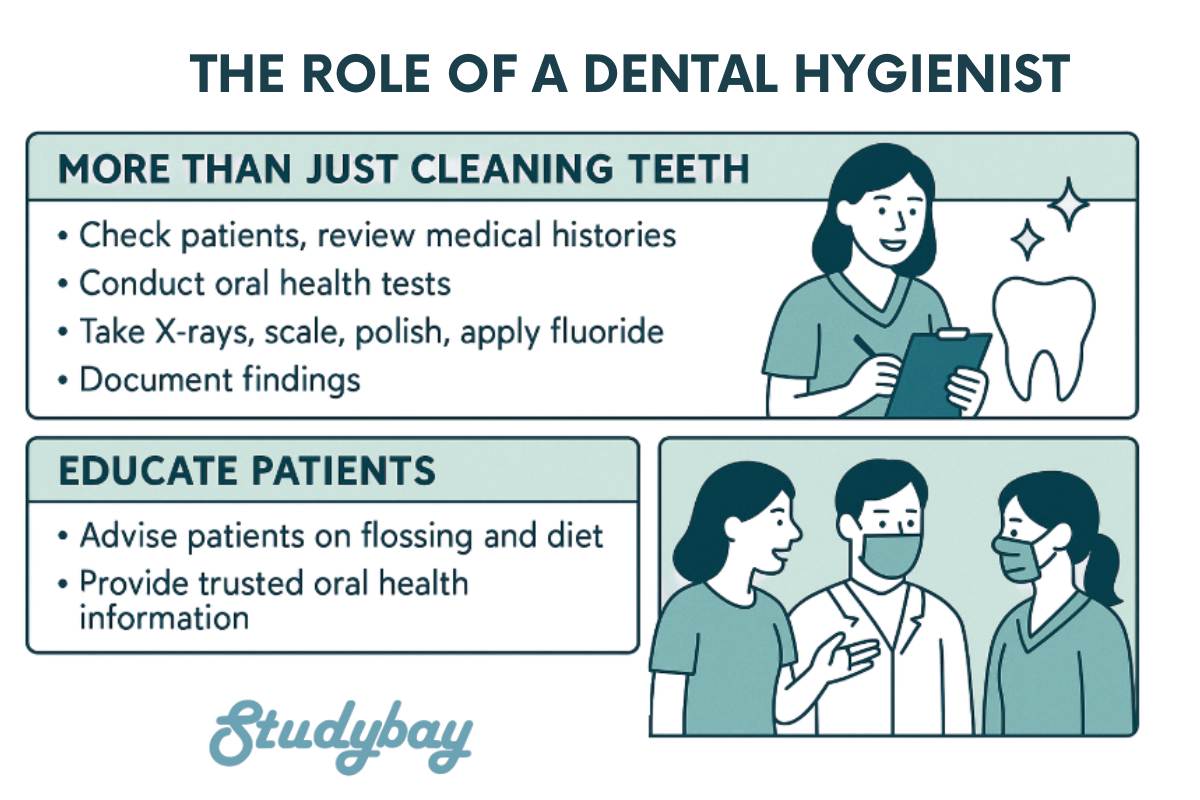
Cleaning teeth is only one element of a dental hygienist's job. Most days begin with checking on patients, going over their medical histories, and doing oral health tests. After that, hygienists might take X-rays, scale and polish teeth to get rid of plaque and tartar, put fluoride or sealants on them, and write down what they find in digital records. Some states also let hygienists give a local anesthetic or help with minor operations while a dentist is watching. It's a job that involves working with your hands, paying attention to details, and caring for patients.
But the labor doesn't stop with clinical responsibilities. One of the most important things a dental hygienist does is teach patients how their everyday behaviors affect their oral and overall health. You become a trusted source of information when you teach people how to floss or give them advice on what to eat. You will also work closely with dentists and dental assistants to make sure that the office runs well and that patients feel cared for.
Duties and Responsibilities
Dental hygienists do a lot of clinical and educational work to help patients feel better and stay healthy. Here are some of the main duties:
- Check the health of your mouth by looking at your medical history and checking your gums, teeth, and soft tissue.
- Use manual and ultrasonic tools to get rid of plaque, tartar, and discoloration on teeth.
- Take dental X-rays and develop them to help with diagnosis.
- Use fluoride and sealants as part of your preventative care.
- Write down anything you find out about the patient and add treatment plans and observations to their digital records.
- Teach patients about diet, flossing, and how to keep their mouths clean.
- Work with dentists to talk about what patients need and make sure they get the care they need.
All of these tasks are very important for keeping your mouth healthy and preventing disease. Your work has both short- and long-term effects, whether you're scaling teeth or showing a kid how to brush better. Dental hygienists are often the first to notice signs of gum disease, cavities, or other health problems that affect the whole body. This makes them very important members of any oral health team.
What Is the Difference Between a Dental Hygienist and a Dental Assistant?
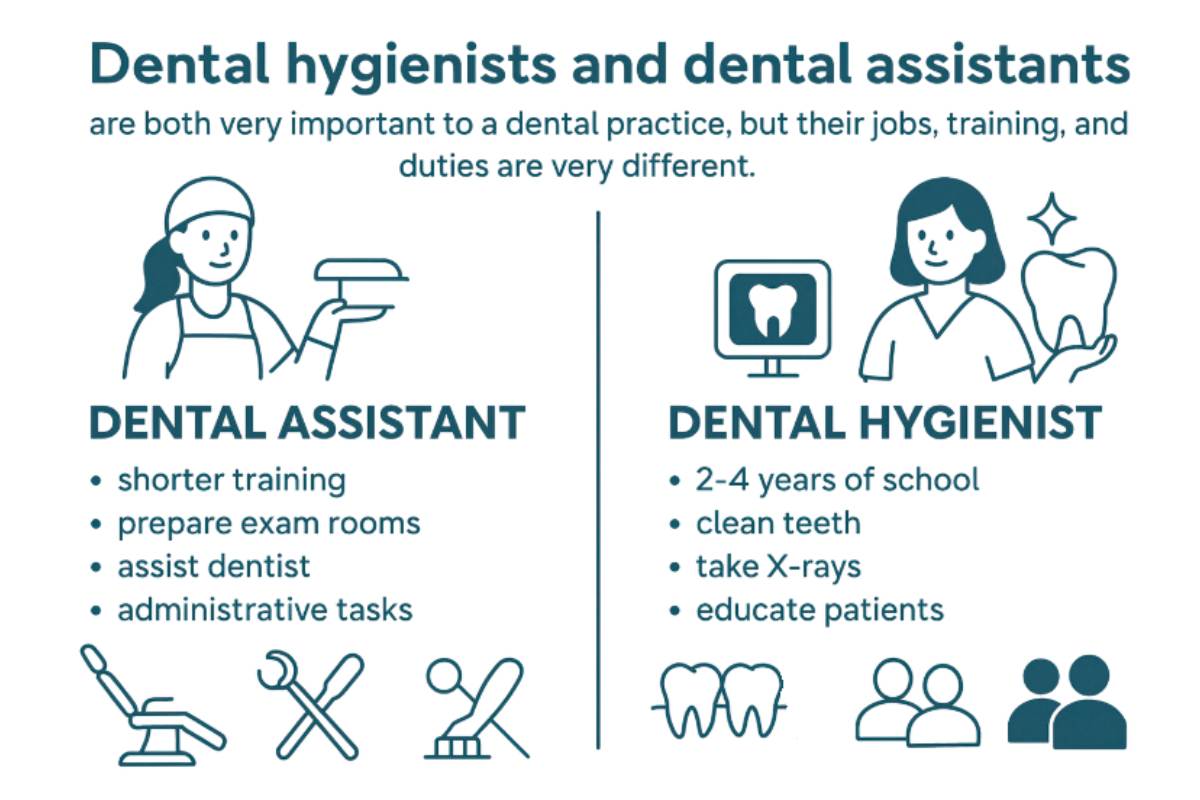
Dental hygienists and dental assistants are both very important to a dental practice, but their jobs, training, and duties are very different. Dental assistants usually finish a shorter curriculum, frequently in less than a year. They focus on things like getting exam rooms ready, cleaning tools, helping the dentist during operations, and doing administrative work.
On the other hand, dental hygienists go to school for 2 to 4 years and are allowed to work more independently with patients. They do clinical treatments like cleanings, X-rays, periodontal examinations, and teach people about oral health. Assistants help the dentist office run smoothly, but hygienists are in charge of taking care of patients and planning preventive treatments.
Areas of Expertise in Dental Hygiene
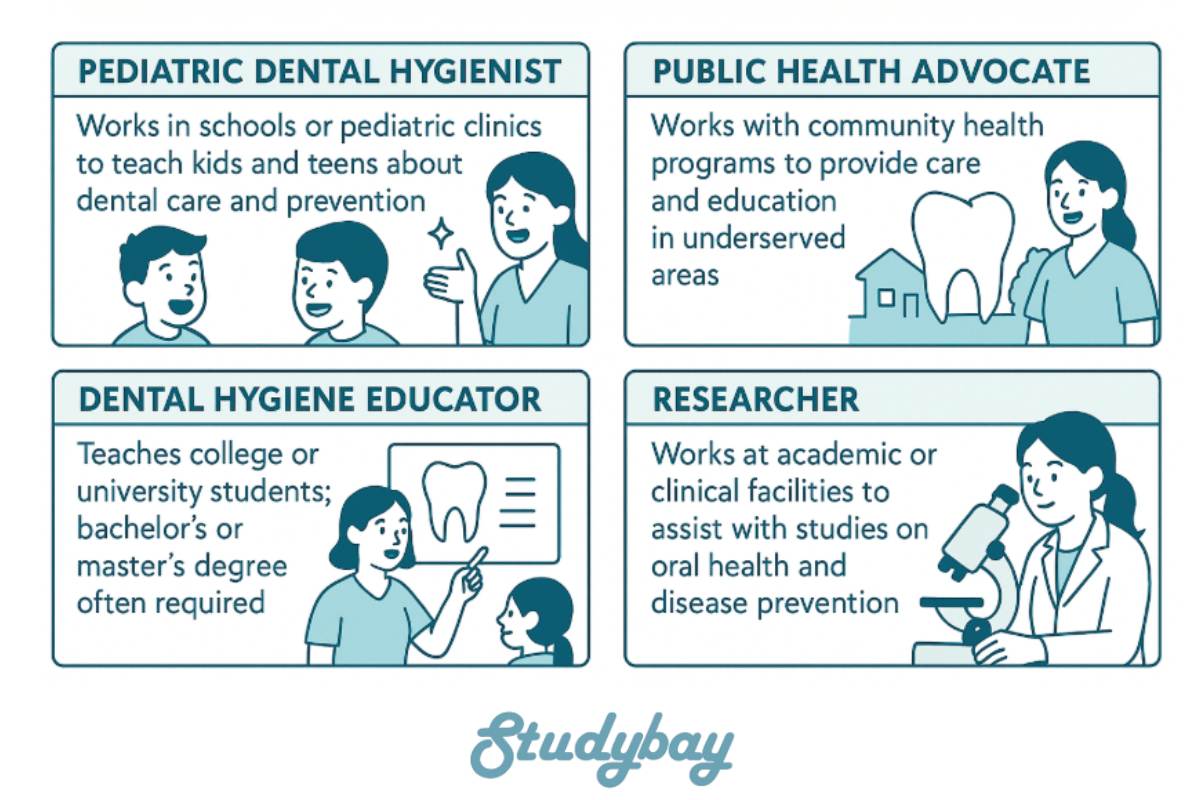
Not all dental hygienists work in general practice, which is one of the best things about this job. You can focus on things that interest you or that you are good at as you gain more expertise.
- A pediatric dental hygienist works in schools or pediatric clinics to teach kids and teens how to take care of their teeth and prevent problems.
- Public Health Advocate: Works with community health groups to provide care and education in communities that don't get enough of it, sometimes in places that aren't standard offices.
- Dental Hygiene Educator: Teaches college or university students how to become hygienists. Most of the time, this path demands a bachelor's or master's degree.
- Researcher: Works at academic or clinical research facilities to help with studies on oral health, disease prevention, and best practices.
These jobs give you a chance to make a bigger difference, advance in your career, and change the future of oral health in ways other than just treating people.
Why Do You Want to Be a Dental Hygienist?
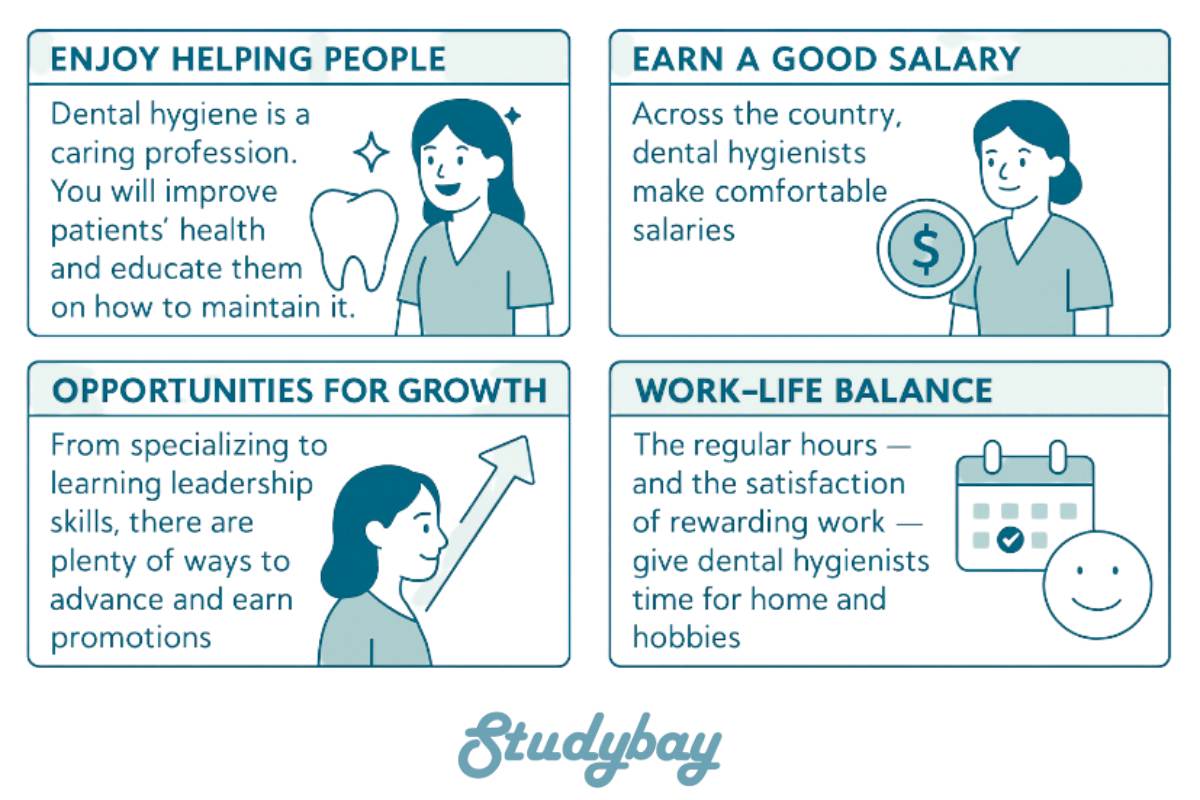
Dental hygiene is an excellent career choice if you want a job with a good salary, employment security, and an easy way to get into healthcare.
The U.S. says that according to the Bureau of Labor Statistics, this field will expand 9% by 2033, which is faster than the national average. The average compensation is more than $94,000 a year, and many hygienists like having flexible hours, with choices for part-time work or four-day workweeks. For a lot of people, it's a smart and long-lasting method to work in healthcare without going to medical school or spending a lot of money.
But there's more than just the numbers; there's the everyday effect. Hygienists help patients feel less anxious about going to the dentist, create long-term relationships with them, and find problems before they get worse.
This job might be perfect for you if you like teaching others, working with your hands, and making a real impact. It could be a great way to start over or make a meaningful change in your career.
Requirements for Education and Training

If you want to know how to become a dental hygienist, the first step is to finish a recognized education program, which is normally at the associate degree level.
Most dental hygienist training programs last two to three years and must be approved by the Commission on Dental Accreditation (CODA) in order for graduates to be able to get a license.
These programs combine classroom learning in disciplines like pharmacology and anatomy with supervised clinical experience, which lets students practice in real dental settings.
Most students start with an associate's degree, but some go on to get a bachelor's or even a master's degree to teach or specialize. In the next sections, we'll go into more detail on license, coursework, and advanced degree opportunities.
What You Need to Do Before You Can Get into a Dental Hygiene Program

You need to complete certain basic academic prerequisites before you can start a dental hygiene program. Most programs need you to have a high school diploma or GED and have taken classes in biology, general chemistry, anatomy and physiology, and sometimes college-level math or communication.
These classes will help you get the science knowledge you need for the program. A lot of colleges also have a minimum GPA, which is usually between 2.5 and 3.0. Some schools may even need you to take college-level preparatory courses before you can apply.
Don't worry if science wasn't your best subject in high school. Many students take a few refresher classes before enrolling and do well in the profession.
Programs for Dental Hygiene That Are Accredited
The first thing to look for while looking for a place to study is whether the program is accredited by the Commission on Dental Accreditation. This badge of approval means that the curriculum fulfills national criteria and makes you eligible to take the tests needed to become a Registered Dental Hygienist.
Even a well-organized program won't let you practice unless it has CODA accreditation. You can find accredited programs at community colleges, dental schools, and universities. These programs provide both associate's and bachelor's degrees, depending on what you want to do with your profession. Before you apply, always check the school's accreditation status on their website or with the ADA's CODA search tool.
A Look at the Curriculum
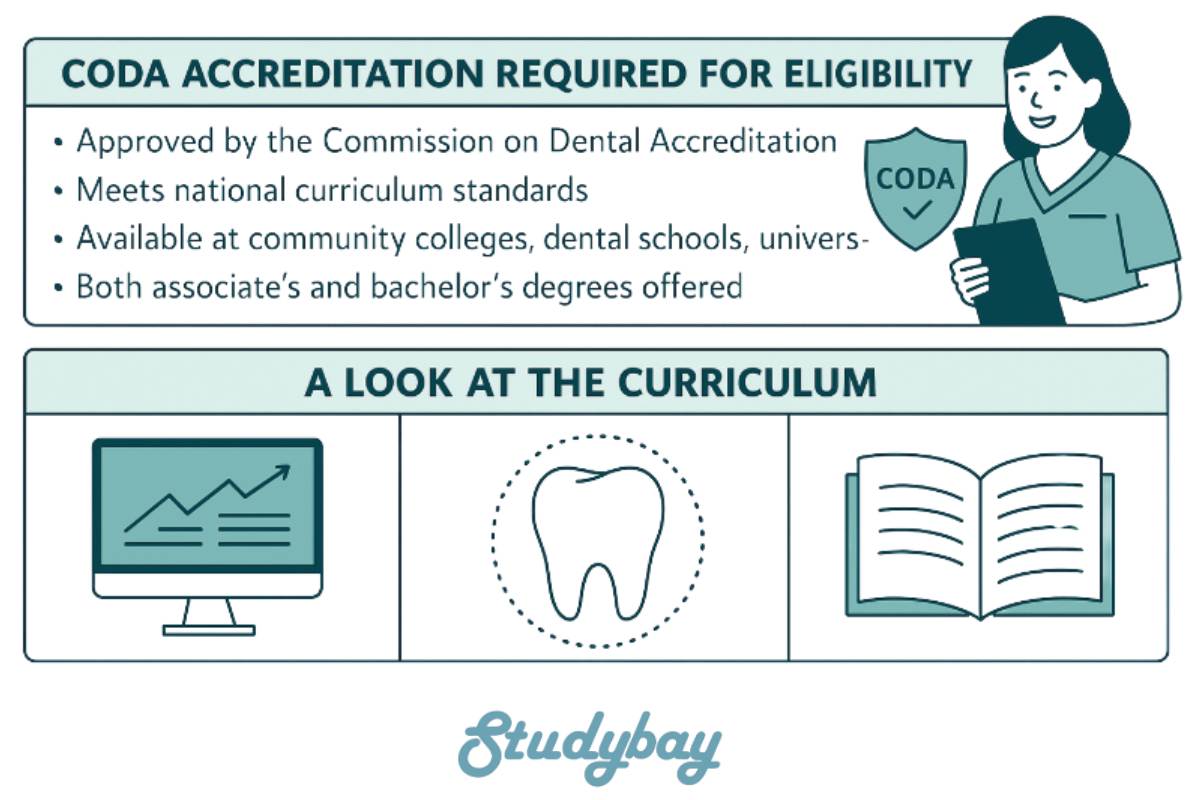
Dental hygiene schools teach more than just how to brush your teeth. They blend science, communication, and clinical practice into an organized curriculum. There are four primary elements that most approved programs cover:
- General Education: Writing in English, psychology, and communication are all important skills for working with patients and as part of a team.
- Biomedical Sciences: Classes in anatomy, physiology, microbiology, and pharmacology help you learn a lot about the human body and how dental health affects general health.
- Dental Sciences: You'll learn about oral pathology, radiography, pain management, and dental materials, all of which are important for safely diagnosing and treating patients.
- Dental Hygiene Sciences: These classes teach you how to work with unique groups of people, as well as clinical procedures, hygiene theory, patient education, and ethics.
These disciplines get students ready for both licensing tests and real-world work in today's patient-centered, evidence-based dental care setting.
Clinical Experience in Dental Hygiene
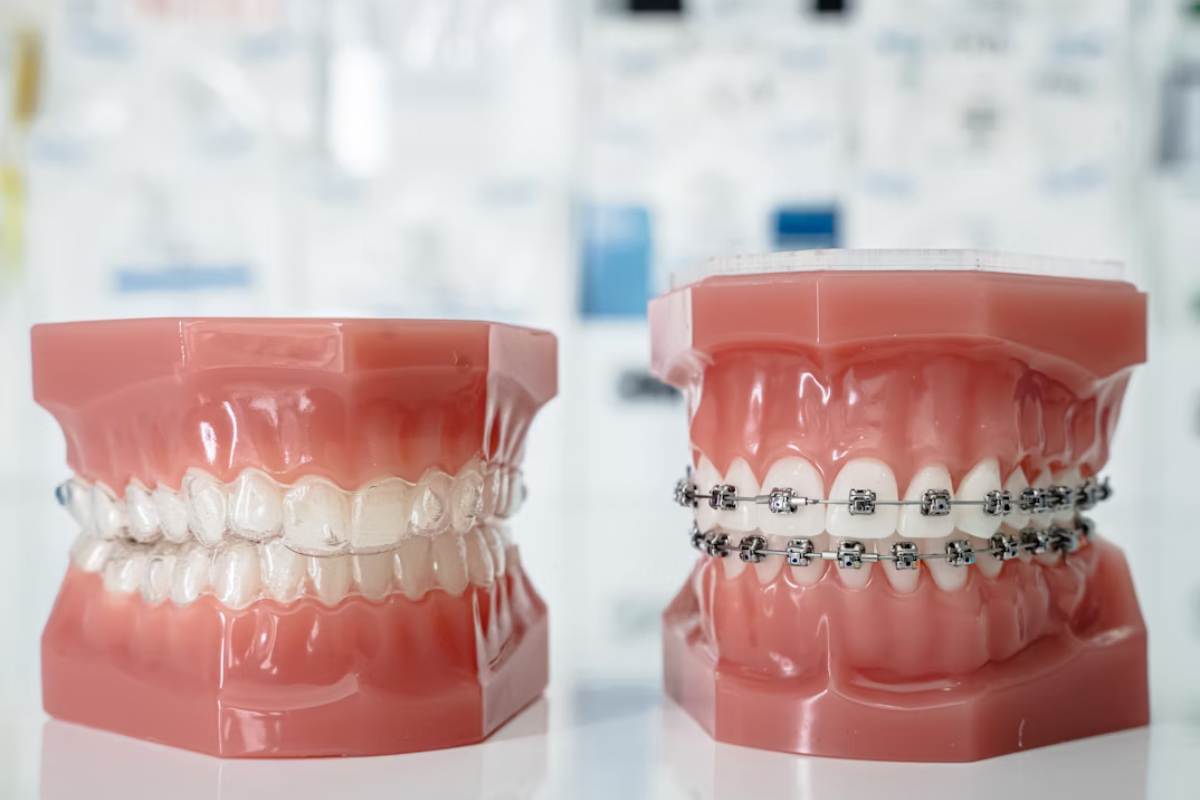
In addition to what they learn in the classroom, dental hygienists need to practice in the real world to get better and more confident. That's where clinical experience comes in.
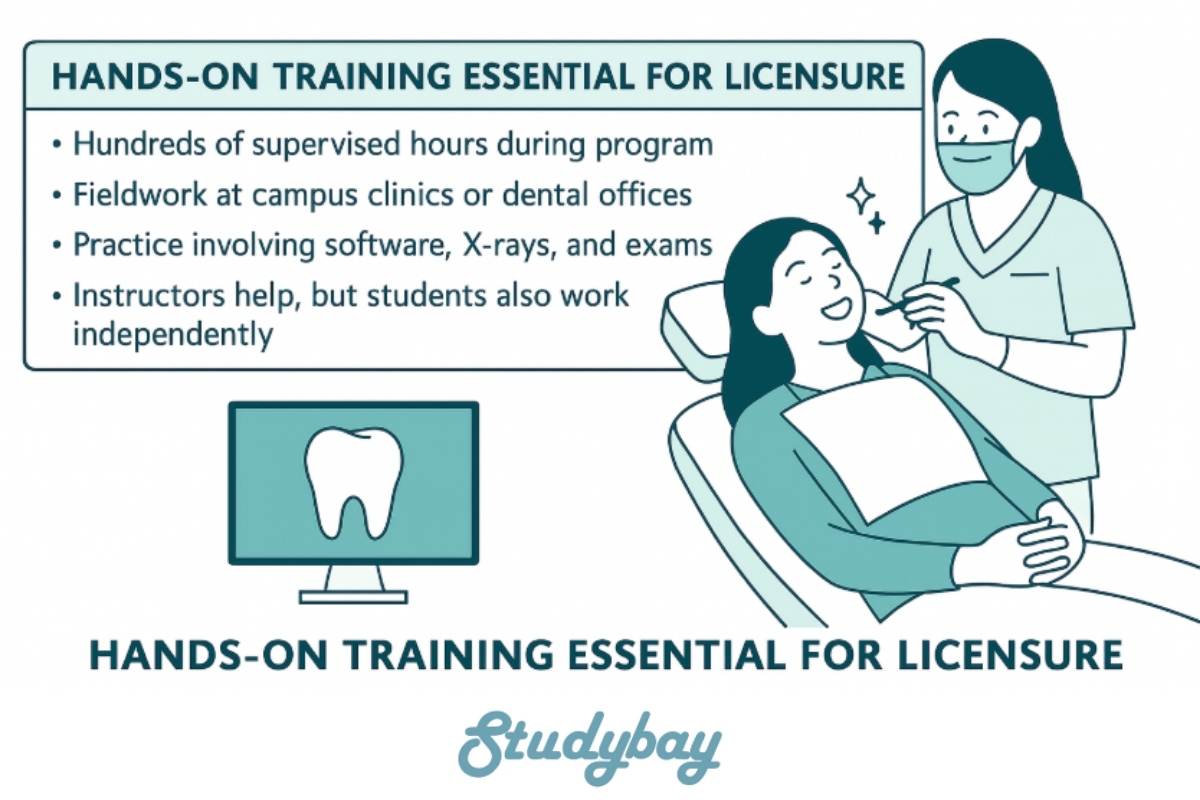
Students spend hundreds of supervised hours treating patients at campus clinics or dental offices that work with the school during the program. You will learn how to use dental software to chart patient data, clean teeth, take X-rays, and perform periodontal exams.
At first, teachers will help you with every step, but by the end, you'll be able to handle situations on your own. This hands-on training gets you ready for licensure tests and also makes sure you're ready to contribute on your first day of work.
Different Kinds of Dental Hygienist Degrees
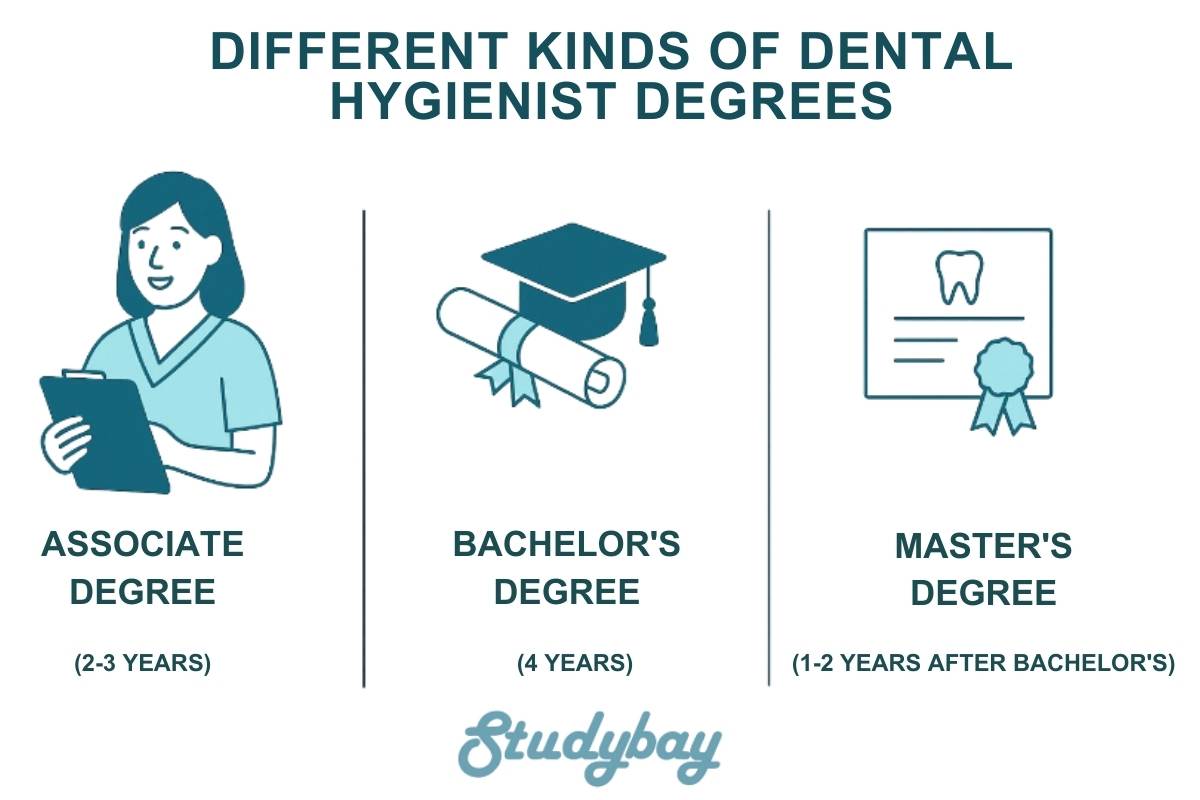
There are many distinct degree pathways that dental hygiene students can pick from, depending on what they want to do with their careers. Each path has its own time obligations and opportunities.
- Associate Degree (2–3 years): This is the most frequent way to get a license to work as a dental hygienist. It is available in community colleges and technical schools, and graduates can get a license and work in entry-level jobs in private offices and clinics. Most students begin here.
- A bachelor's degree takes four years and includes extra classes in research, public health, and leadership. It's great for people who wish to work in community health initiatives, teach, or stand out in a crowded employment market. Some programs are degree-completion routes for licensed hygienists who already have an associate's degree.
- A master's degree (1–2 years after a bachelor's) is for hygienists who want to teach at colleges, run public health programs, or do research on oral health. It usually takes a bachelor's degree in dental hygiene and may also include a thesis or capstone project.
You only need an associate degree to get started, but getting more degrees can help you move up to more specialized or leadership roles in the profession.
How Long Does It Take to Get a Job as a Dental Hygienist?
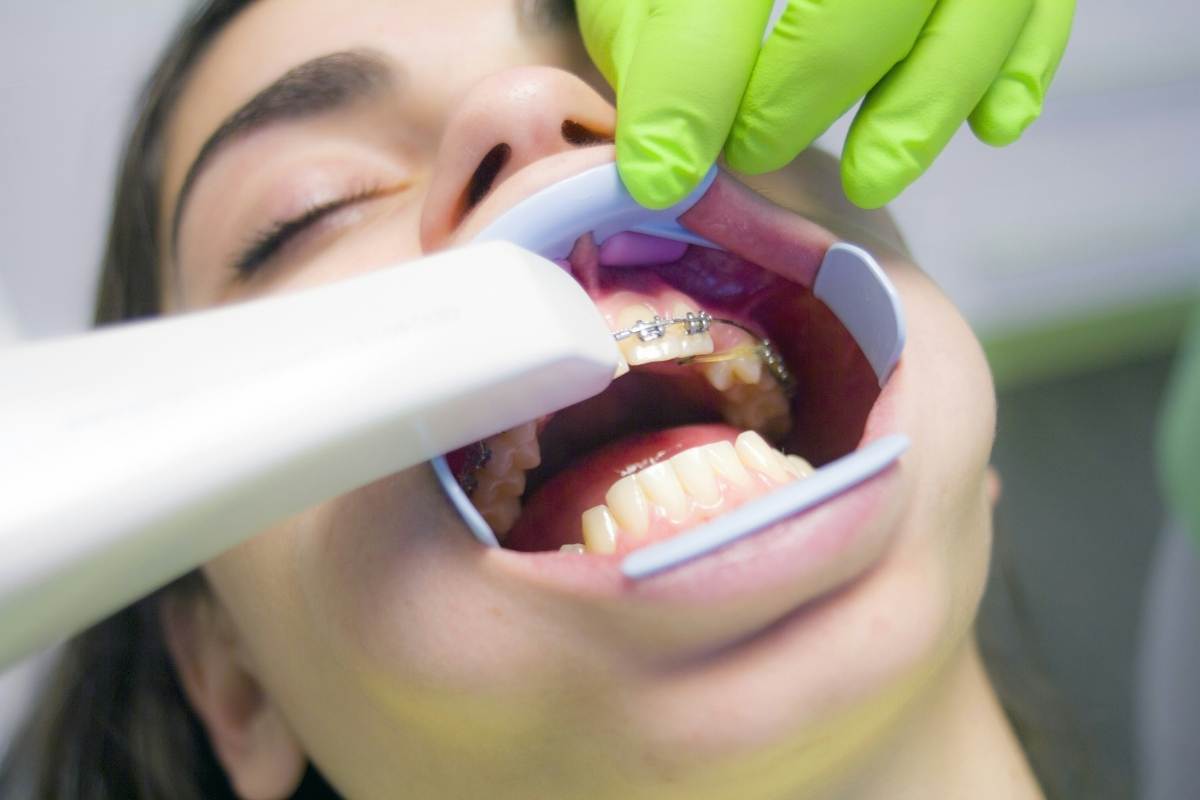
Depending on the type of degree they want, most students take from 2 to 4 years to finish their studies.
Most people get an associate degree, which usually takes two years of full-time study.
A bachelor's degree takes two more years, and a master's degree can take one to two more years after that. Most of the time, you can finish the requirements to get your license, such taking tests and filling out applications, within a few months after graduating.
Some students look into accelerated or online bridge programs, which can speed up the process, especially for those who already have a degree in another discipline.
Pathway to an Associate Degree
The associate degree in dental hygiene is the most common and direct way to get into the field. You may find these programs at community colleges and technical schools all throughout the country. They usually take two to three years to finish.
Students learn about science and dental theory in the classroom, but they also get a lot of hands-on experience in supervised situations. The program must be accredited by CODA in order to qualify for licensure.
A lot of students select this option since it's cheap, easy to find, and gets you ready to start working as a dental hygienist soon after graduation, with no other schooling needed. It's a great choice if you want to get into a secure healthcare job quickly and with a lot of focus.
Pathway to a Bachelor's Degree
It usually takes four years to get a bachelor's degree in dental hygiene, and the curriculum is more thorough and well-rounded than that of an associate's degree.
Students attend classes in research, public health, health policy, communication, and leadership in addition to clinical and science classes.
This new curriculum gets graduates ready for more than just clinical work. They can also work in community health programs, teaching, sales, or management.
You don't need a bachelor's degree to become a registered dental hygienist, but having one can help you get ahead in a competitive employment market and lead to jobs that aren't traditional. It's a good idea for students who want more freedom, wish to progress in the future, or plan to get a master's degree later on.
Pathway to a Master's Degree
If you are a licensed dental hygienist and want to become a leader, teacher, or researcher, the next step is to get a master's degree in dental hygiene or a related discipline.
Most of the time, these programs last one to two years and require applicants to have a bachelor's degree, which is commonly in dental hygiene. Healthcare management, curriculum design, public health leadership, and research methods are all common subjects in courses. Most programs end with a thesis or capstone project.
Graduates are qualified to work in schools, do research, make public policy, or lead big oral health programs. This degree is for people who wish to do more than just work in a clinic and have an impact on the whole field.
Dental Hygiene Programs on the Internet
You can't become a dental hygienist completely online, but many authorized programs offer online courses, especially for students who are moving up from an associate's degree to a bachelor's or master's degree.
Licensed hygienists can take general education, public health, or leadership courses on a flexible schedule while still working. But you still have to do your clinical training in person, usually at a local dental office that is part of the program.
Online learning is great for busy parents, those who work, or people who live far from school and want to improve their skills without taking time off from work. Just make sure the program is CODA-accredited and that your old credits will count toward your new degree.
Licensing and Certification
Getting a degree from an authorized school isn't the last step. To practice lawfully, you need to get a license in your state.
The National Board Dental Hygiene Examination (NBDHE), which tests your theory and knowledge, and a clinical exam given by a regional board are the two key tests you need to pass in most states.
Some states additionally demand a jurisprudence exam, which assesses how well you know the laws and morals of your state.
You can apply for your license and officially become a Registered Dental Hygienist (RDH) once you've passed these tests.
Licensing is different from state to state, although many states have agreements that let you use your credentials in more than one state if you move or want to work in more than one state.
Requirements That Are Different in Each State
The essential processes of becoming a dental hygienist are the same in all of the U.S.; however, each state has its own licensing board and rules. To keep their license, several states require extra measures, including passing a jurisprudence exam, getting current CPR certification, or completing a specified number of continuing education (CE) hours.
The costs and time frames for renewals also differ. If you want to practice in a certain state or migrate between states, you need to check with that state's dental board for the most accurate and up-to-date information. Most boards provide their full requirements online and give you printable application materials to aid you with the process.
Job Demand and Outlook
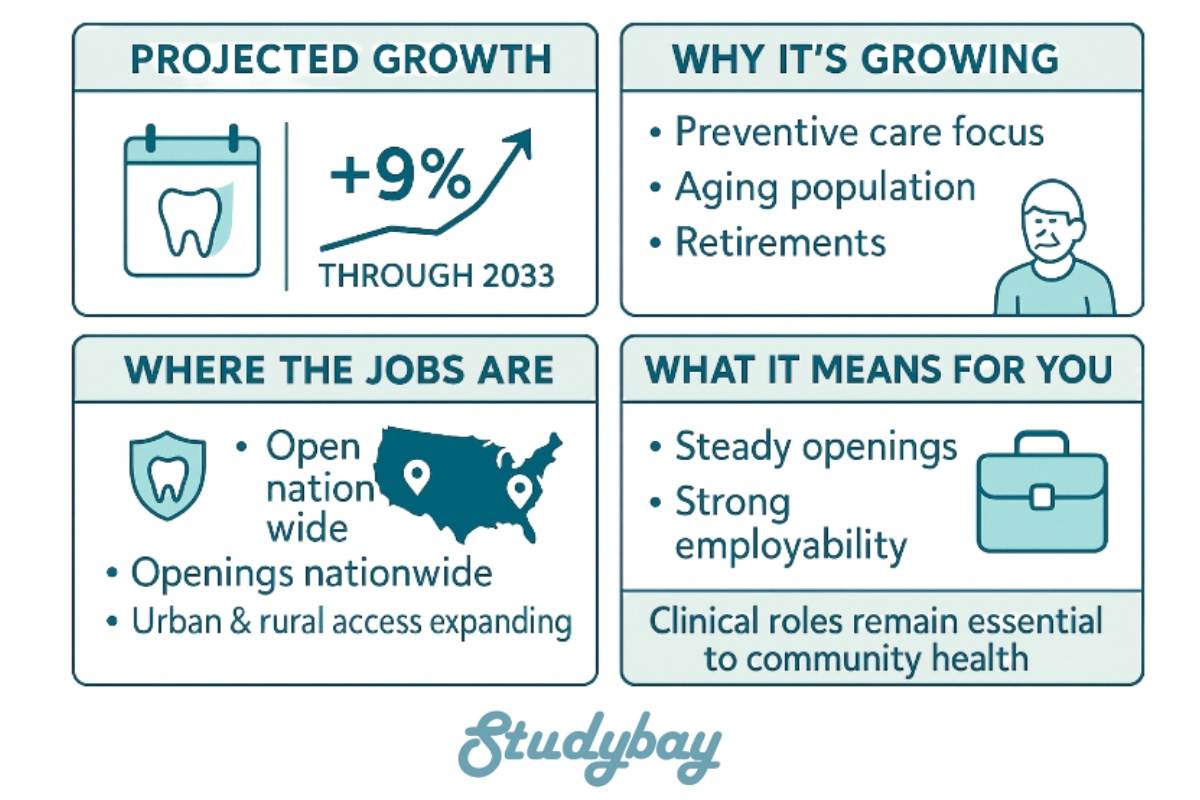
The job market for dental hygienists is quite solid. The U.S. The Bureau of Labor Statistics says that jobs in this profession will expand 9% through 2033, which is faster than the average for all jobs.
This growth is due to more focus on preventive dental care, an aging population that needs continuous oral health services, and a wave of retirements among present hygienists that is predicted to happen soon.
Hygienists will continue to be very important for keeping communities healthy as more individuals make oral health a priority and more people in both cities and rural regions can get care. This means that students who want to work in this profession will always have jobs available all around the country.
Where Do Dental Hygienists Work?

Most of the time, dental hygienists work in private dental offices; however, that's not all. This job has a surprisingly wide range of work settings:
- General or Specialty Dental Offices: This is where hygienists do regular cleanings, take X-rays, and teach patients about dental care.
- Community Health Clinics: Helping those who don't have access to health care through public health programs.
- Schools: Teaching kids about oral health and giving them preventive treatment through school-based initiatives.
- Hospitals and medical clinics: working with medical teams in places where oral health affects overall health care.
- In a corporate or research setting, you could work on developing dental products, teaching, or researching public policy.
- Colleges and universities: working as a teacher in dental hygiene programs or doing research for the school.
This job is one of the most flexible in healthcare since you can work with different populations, in different settings, and at different times.
What a Dental Hygienist Does Every Day
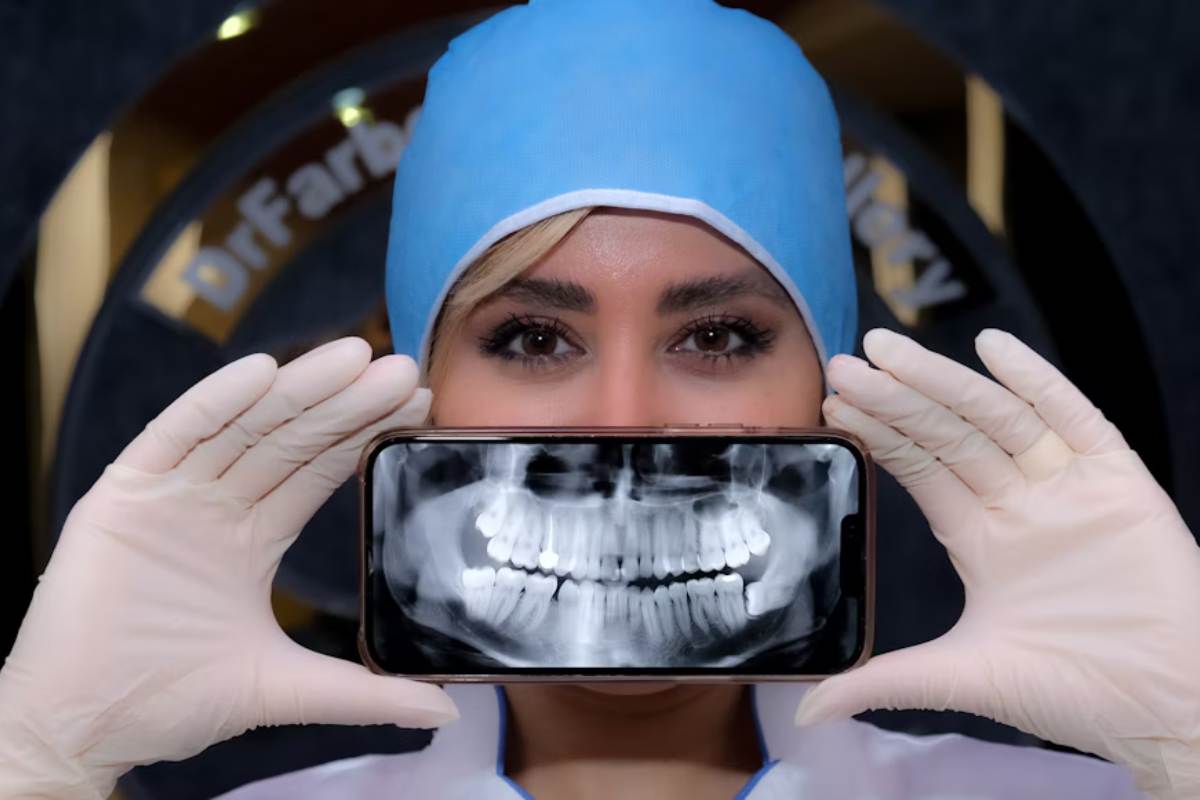
A dental hygienist's day involves a mix of working with patients, doing clinical work, and working with others. Most days begin with going over patient paperwork, getting treatment rooms ready, and getting tools ready for sterilization.
Hygienists do professional cleanings, take dental X-rays, check the health of the gums, and look for symptoms of disease or decay all day long. They spend a large amount of time educating patients – explaining flossing procedures, reviewing food, and answering queries about oral hygiene items.
Hygienists also keep digital records up to date, keep track of how patients are doing, and work closely with dentists to come up with treatment plans. The job requires both technical competence and a caring touch, whether it's calming a child's fears or identifying an early symptom of gum disease.
Skills and Traits Needed to Succeed

To be an excellent dental hygienist, you need more than just technical skills. Yes, you will need to be able to use tools with precision and pay attention to detail in order to see early symptoms of sickness.
Your people skills are just as vital, though. You need to be able to explain complicated ideas in simple terms, make patients feel comfortable, and change your approach based on their age, mood, or condition.
Patients who are anxious generally talk to hygienists first, so it's important for them to be patient, understanding, and able to communicate clearly. You also need to be able to keep calm on a hectic day and have good organizational skills to be a really good dental care provider.
A Normal Work Schedule
One of the best things about being a dental hygienist is that you may work when you want. Many hygienists work part-time, usually two to four days a week. This makes it a good job for parents, students, or people who have other responsibilities.
Some people work full-time in bigger practices, public health settings, or schools. Most dentist offices are open throughout regular business hours, so evenings and weekends are not usually needed. This makes it a perfect choice if you want hours that are easy to plan.
Some hygienists even choose to work in more than one office or take on short-term jobs to mix things up and have more freedom with their money.
How Much Do Dental Hygienists Earn?

The U.S. says that according to the Bureau of Labor Statistics, the average compensation for a dental hygienist in the U.S. is around $94,260 a year, or about $42 an hour. But your actual income can be very different depending on a number of things, such as where you reside, how many hours you work, and how much experience you have.
Because of demand and the expense of living, hygienists in areas like California, Washington, and Alaska generally make more than the average salary. People who work full-time in hospitals or public health jobs may additionally get benefits and bonuses that increase their total pay. Dental hygiene offers a good salary and flexible hours, which is a rare combination in the healthcare field.
Opportunities for Career Growth
You can grow in your job as a dental hygienist. A lot of hygienists start out working in a clinic and then move on to other areas as they learn more and gain expertise.
You may teach at a college, work in public health initiatives, or do oral health research if you have a bachelor's or master's degree.
Some people want to work in administration at big dental offices or join corporate teams to help with product development and training.
Some states even let hygienists do more than just clean teeth. They can give local anesthetic or help with restorative care. You can grow in this industry, whether you want to be a leader, an advocate, or an educator. You don't always have to leave the field to do so.
Problems in the Field
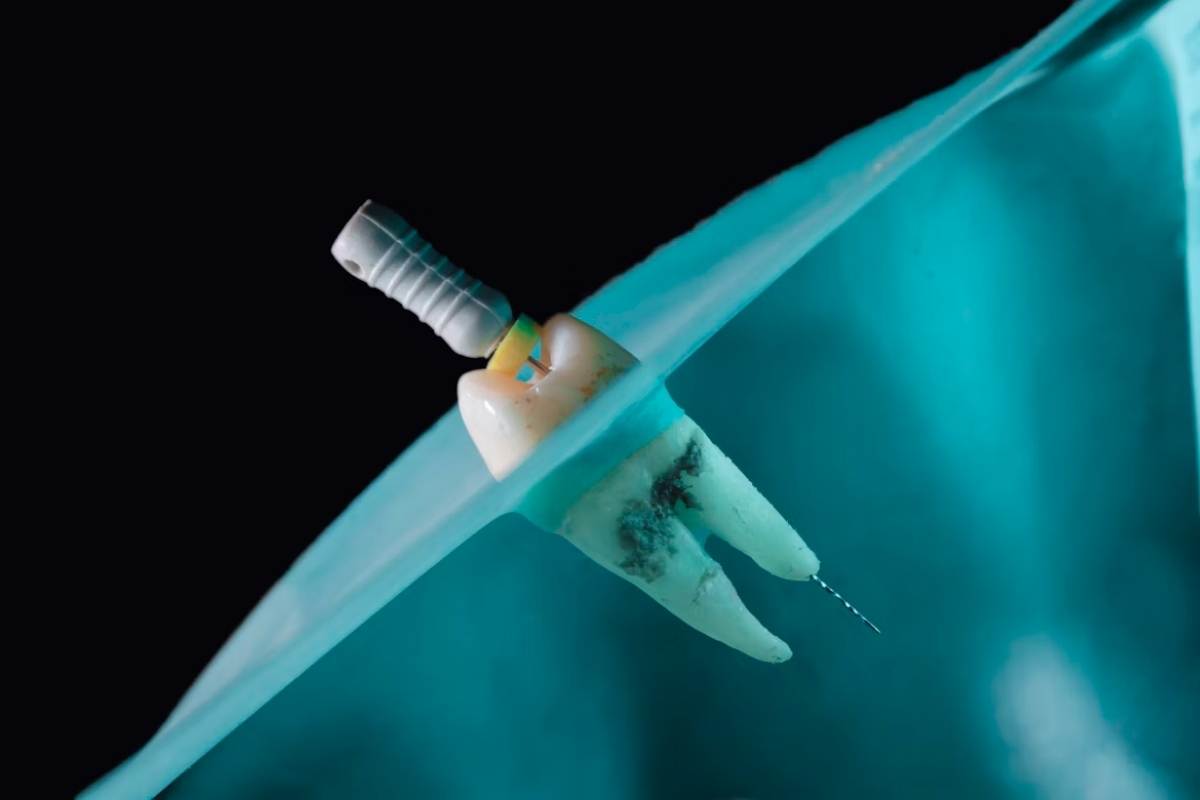
Dental hygiene, like every other job in healthcare, has its own set of problems. One of the most prevalent causes of physical strain is staying in small spaces for long periods of time. If you don't follow correct ergonomics, this might cause pain in your back, neck, or wrists.
Some days might be hard on your emotions, especially when you have to deal with anxious or uncooperative patients. Hygienists often have to juggle a lot of things at once, like taking care of patients, writing reports, sterilizing tools, and working with others.
And since you work in a fast-paced clinical setting, there is a lot of pressure to be accurate and get things done quickly. That being said, a lot of these problems can be dealt with by making excellent habits, having helpful coworkers, and continuing to learn and grow in your career.
Is It Worth It to Become a Dental Hygienist?
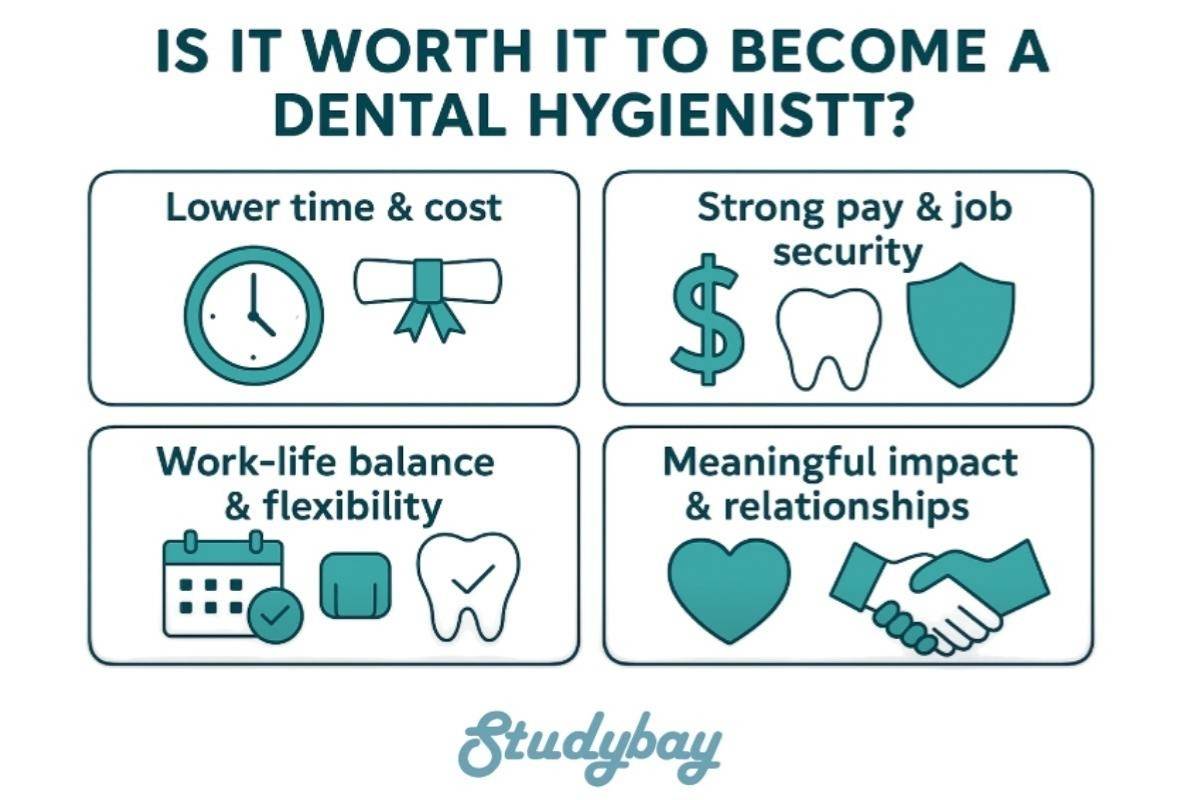
For a lot of people, the answer is yes: becoming a dental hygienist is worth it. It is a vocation that requires less time and money to get an education than many other healthcare jobs, but it still pays well, offers job security, and allows for a good work-life balance.
You also get the opportunity to make a significant difference in people’s lives, often creating long-term relationships with patients. That stated, if it's "worth it" depends on what you want to achieve.
Dental hygiene can be a very satisfying career and personal life choice for people who like working with their hands, appreciate flexibility, and like helping others stay healthy.
Advice for People Who Want to Be Dental Hygienists
Here are some things you should know if you want to become a dental hygienist:
- Look into certified programs early on. Find schools that are approved by CODA, compare the courses they offer, and learn about the clinical hour requirements.
- Follow a hygienist around during work. You may get a better idea of what it's like to work at a dentist office by spending a day there. You'll see both the good and the bad elements.
- Get better with your science. Taking classes in biology, anatomy, and chemistry can help you become ready for the program and make the switch easier.
- Now is the time to practice managing your time. Dental hygiene programs can be very hard, especially when you're doing clinical rotations. It's important to get things in order early.
- Take care of your health. Start making habits that will help you keep your posture and hand strength. It will pay off in the long term.
A little forethought and self-awareness will help you do well in this sector.
FAQ
Q: How long does it take to become a dental hygienist?
A: Most associate degree programs take two to three years to finish, and that includes clinical training.
Q: Is it hard to go to dental hygiene school?
A: It can be hard, especially during the clinical periods, but it's extremely feasible if you have good study habits and know how to manage your time.
Q: Do I need a bachelor's degree to earn a license?
A: No. Most states will let you take license examinations if you have an associate degree from a recognized college.
Q: Can older people become dental hygienists?
A: Yes, for sure. It's never too late to start a program; many students do so in their 30s, 40s, or even later.
Q: Can you grow in this job?
A: Yes. You can get a job in teaching, research, public health, or management if you get more education or qualifications.