
16 min
0
04.25.2025

Key Takeaways
- 41% of students are leaning on federal student loans to fund their education, covering nearly one-fifth of their total college costs.
- 76% of students used scholarships and grants to pay for college, covering 29% of the total cost.
- 50% expect to graduate with over $30,000 in student debt, and 20% anticipate debt exceeding $50,000.
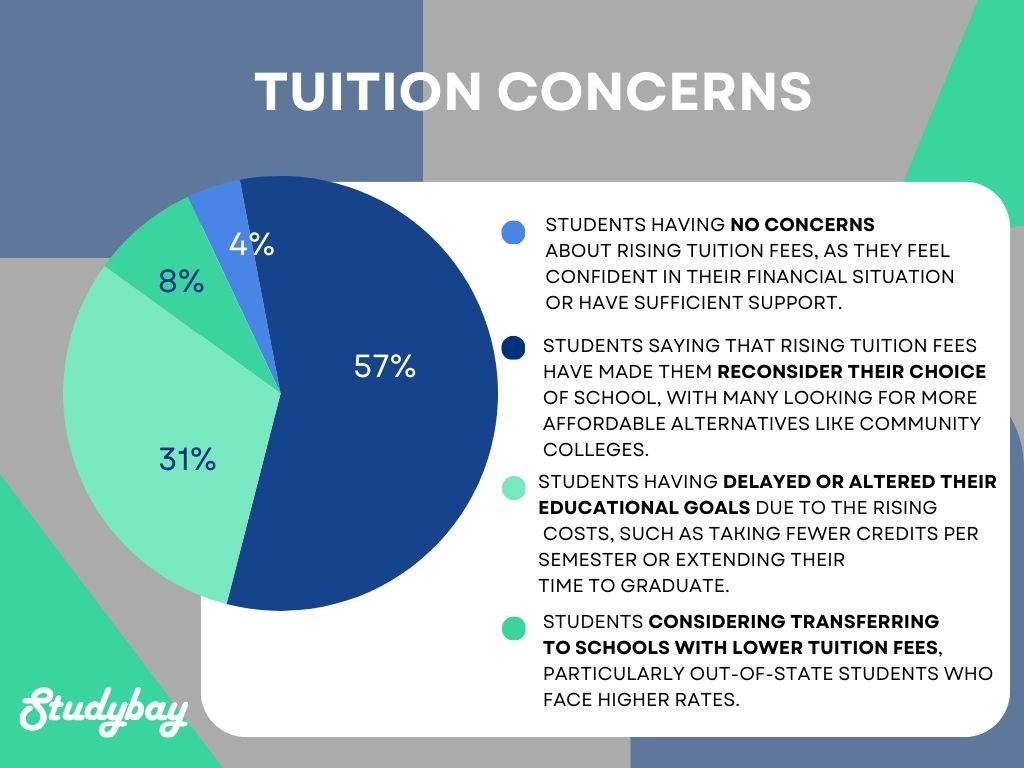
- 57% of students have reconsidered their choice of school due to rising tuition, with many exploring more affordable alternatives like community colleges.
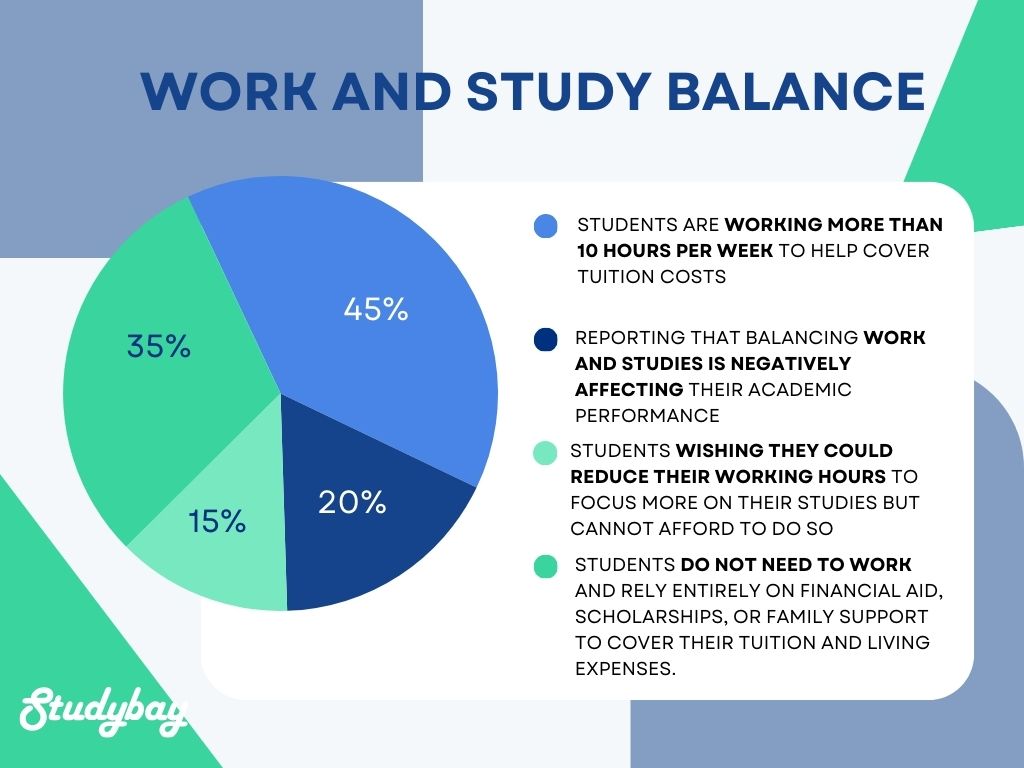
- 45% of students work more than 10 hours per week to cover tuition, and 20% report that balancing work and studies negatively affects their academic performance.
Note: All data is from a recent Studybay survey conducted among 1,000 college students across the United States.
A decade ago, paying for college might have been a stretch, but today, it's become a financial Everest for many students and their families. Tuition in the U.S. has climbed so high that it’s outpacing both inflation and wage growth.
According to the National Center for Education Statistics (NCES), the average tuition for a four-year university has surged by more than 30% since 2012—far outpacing the rise in living costs. As a result, the student debt crisis has ballooned to a staggering $1.77 trillion as of 2025 with over 42 million Americans carrying federal student loan debt, and it’s only getting worse.
So, what’s behind these skyrocketing prices? The factors are many: state funding for public universities is drying up, faculty and administrative salaries are soaring, campuses are expanding, and technology costs are rising.
The bottom line? Higher education is becoming historically more expensive, pushing students and families to search for alternative ways to pay—through federal aid, scholarships, work-study programs, and, unfortunately, more loans.
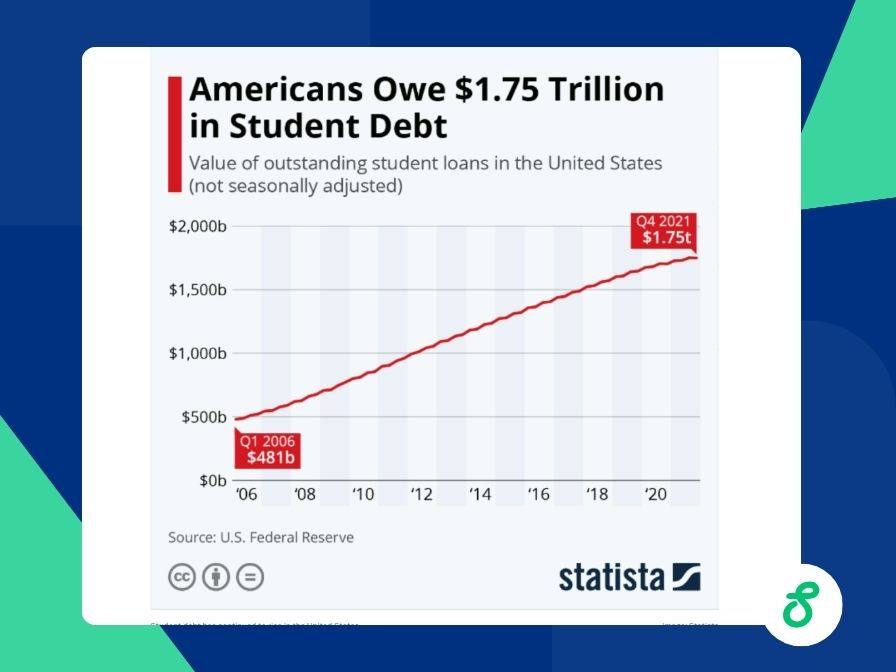
Source: Statista
Overview of Tuition Costs in the U.S.
Higher education in the United States is one of the most diverse and expensive systems in the world. Unlike many European and Asian countries, where university tuition is heavily subsidized or even free, the U.S. relies on a combination of federal funding, state contributions, private endowments, and tuition fees to sustain its institutions.
Fees vary significantly based on a few factors. Among these, the ones that seem to make most of the difference:
- The type of institution
- The geographic location
- The residency status of students
While private universities tend to have the highest tuition rates, public universities offer lower tuition for in-state residents, and community colleges provide the most affordable option for those seeking higher education.
Let’s take a closer look at the costs associated with each.
Private Universities
Private universities in the U.S. operate independently of any form of state funding. They rely on tuition revenue, endowments, and private donations to fund their operations.
As of the 2024–2025 academic year, the average tuition for a private, nonprofit four-year university is $43,350 per year.
Why Are Private Universities More Expensive?
While the answer may be obvious, a few things are worth mentioning here.
- Lack of State Funding: Public universities receive state subsidies that offset tuition costs for residents. Private universities rely on tuition and private donations.
- Prestige and Ranking: Elite private institutions, to name just Harvard, Yale, and Stanford, among many others, charge higher tuition due to their global reputation. These schools also provide a wide range of other "exclusive benefits", like smaller class sizes, and higher faculty-to-student ratios.
- Faculty Salaries and Research Funding: Private universities often attract top-tier professors with competitive salaries and research funding.
- Campus Facilities and Student Services: Private institutions invest heavily in exclusive services. Enrolling in one of these schools provides you access to cutting-edge technology, modern dormitories, dining facilities, and extracurricular programs.
The Financial Aid Factor
Yes, private universities have the highest sticker prices, but here’s the trick: they also offer some of the most generous financial aid packages. Many students at elite institutions receive substantial need-based grants and scholarships, helping them reduce out-of-pocket expenses.
Harvard University reports that over 50% of its students receive need-based scholarships, with an average award of $53,000 per year.
Public Universities (In-State vs. Out-of-State)
Public universities are funded by state governments, and students have access to subsidized tuition rates. For out-of-state students (who do not contribute to state taxes), the costs of tuition are higher.
As of 2024, the average annual tuition for public universities is:
- $11,630 for in-state students
- $30,780 for out-of-state students
Why Are Out-of-State Fees Higher?
There are several factors involved here.
- State Residency Benefits: In-state tuition is subsidized by state taxes. What does this mean? Students can qualify for lower rates if they have been residents for a set period (one year or more).
- Tuition Reciprocity Programs: Some states participate in tuition reciprocity agreements. These programs, like the Western Undergraduate Exchange (WUE) or the Midwest Student Exchange Program (MSEP), are accessible to students from neighboring states at lower costs.
- University Prestige and Demand: Consider a few flagship state universities, The University of Michigan and the University of California among them. They work by a system that charges higher out-of-state tuition due to their popularity and ranking.
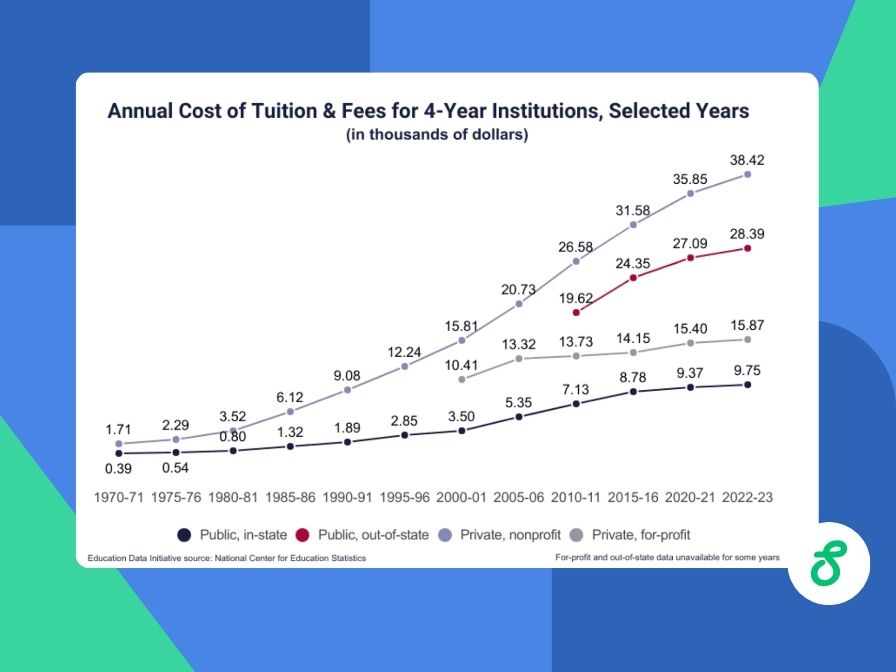
Source: National Center for Education Statistics
The Impact of State Budget
As of the 2024–2025 academic year, state funding for public colleges and universities in the United States has experienced a modest increase. According to the State Higher Education Executive Officers Association (SHEEO), state funding for higher education rose by 4.3% year-over-year, totaling $129.7 billion nationwide.
However, while total state funding for higher education has increased, the per-student funding has not experienced significant growth, potentially impacting the affordability and quality of education at public institutions.
Community Colleges
Community colleges are the most affordable alternatives to four-year institutions. Their advantages? Lower tuition rates and flexible learning options. The drawback is that these institutions offer only two-year associate degrees and certificate programs. For anyone looking to expand their education, you would have to transfer to four-year universities after graduating here to complete a bachelor’s degree.
As of the 2024–2025 academic year, the average annual tuition and fees for public community colleges in the United States are approximately:
- $3,598 for in-district students
- $8,622 for out-of-district students
Why Are Community Colleges More Affordable?
There are several factors involved here.
- Local and State Funding: Community colleges receive more direct local funding, keeping tuition lower for residents.
- No On-Campus Housing: Unlike universities, most community colleges do not offer dormitories, significantly reducing the total cost of attendance.
- Smaller Facilities and Lower Administrative Costs: Community colleges tend to have fewer faculty research requirements and lower overhead expenses, allowing them to maintain lower tuition.
The Role of Community Colleges in Higher Education
For many, a community college is the way to enter the workforce. For higher education requirements, they are not the best option. Here are a few of the main benefits, though:
- Affordable Pathway to a Bachelor’s Degree: Many students begin at community colleges to complete general education requirements before transferring to a four-year institution.
- Flexible Scheduling: Community colleges offer evening, weekend, and online classes, making them ideal for working students.
- Workforce Training: Many community colleges provide vocational and technical programs that lead directly to employment.
Trends in Tuition Costs Over the Past Decade
The cost of higher education in the U.S. has risen dramatically, and it has undeniably left behind inflation and wage growth. An important thing to keep in mind is that price hikes have affected all types of institutions, be they private or state.
The upward trajectory of higher ed prices has been relentless. Since 2010, the average cost of tuition at four-year institutions has risen by approximately 30% to 40%, depending on the type of institution.
Survey Results: Financial Impact of Rising Tuition Costs
A recent survey conducted by Studybay among 1,000 college students across the United States reveals the significant burden tuition fees place on their financial well-being. The survey aimed to understand students' perspectives on the cost of higher education, how they are coping with rising expenses, and the effect on their overall educational experience.
Key Findings
Tuition Payment Sources
- Federal Student Loans: 41% of students reported borrowing for college, covering 19% of the total cost.
- Parent Borrowing: 11% of the total cost was covered by parent borrowing, marking an increase from previous years.
- Scholarships and Grants: 76% of students used scholarships and grants to pay for college, covering 29% of the total cost.
- Student Income and Savings: 11% of the total cost was covered by student income and savings.
- Relatives and Friends: 2% of the total cost was covered by relatives.
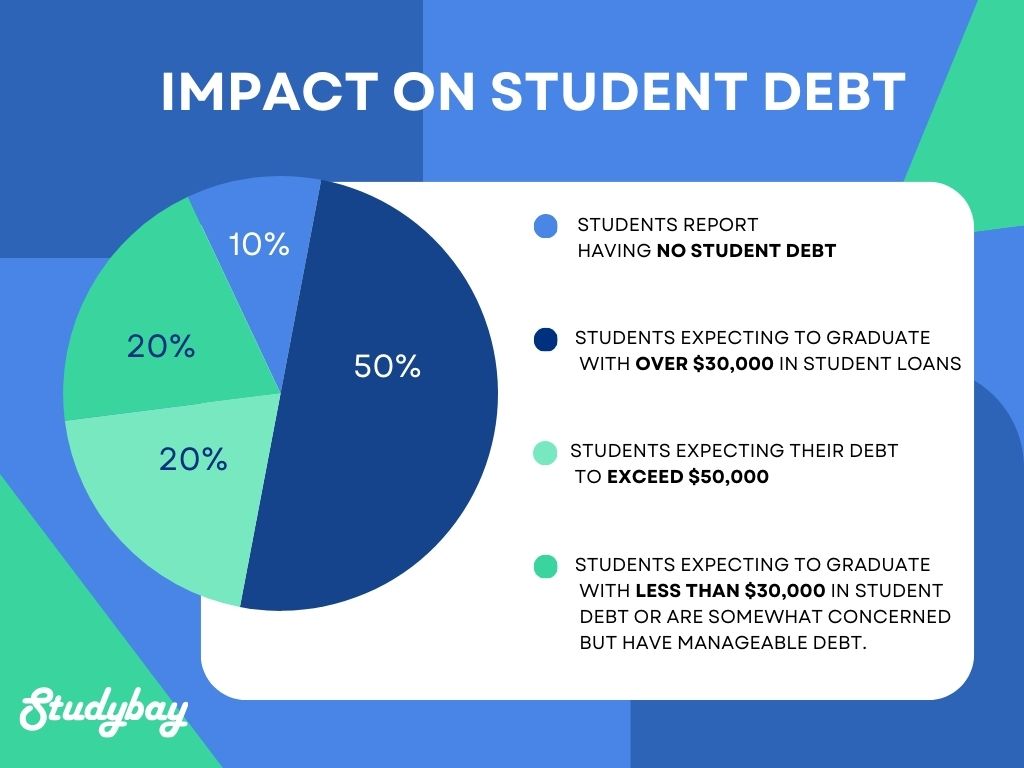
Impact on Student Debt
- 10% of students report having no student debt.
- 50% of students expect to graduate with over $30,000 in student loans.
- 20% expect their debt to exceed $50,000.
- 20% of students expect to graduate with less than $30,000 in student debt or are somewhat concerned but have manageable debt.
Tuition Concerns
- 4% of students report having no concerns about rising tuition fees, as they feel confident in their financial situation or have sufficient support.
- 57% of students say that rising tuition fees have made them reconsider their choice of school, with many looking for more affordable alternatives like community colleges.
- 31% have delayed or altered their educational goals due to the rising costs, such as taking fewer credits per semester or extending their time to graduate.
- 8% of students are considering transferring to schools with lower tuition fees, particularly out-of-state students who face higher rates.
Work and Study Balance
- 45% of students are working more than 10 hours per week to help cover tuition costs.
- 20% report that balancing work and studies is negatively affecting their academic performance.
- 15% of students wish they could reduce their working hours to focus more on their studies but cannot afford to do so.
- 35% of students do not need to work and rely entirely on financial aid, scholarships, or family support to cover their tuition and living expenses.
How Students Are Dealing With Rising Tuition
Tuition is going up every year and students across the U.S. are finding ways—sometimes tough—to make college more affordable. Here are a few stories from students who are navigating this:
I knew from the get-go that paying full tuition wasn’t going to happen so I threw myself into applying for scholarships. It wasn’t easy and it took a lot of time but I’m so glad I was able to cover most of it. I also work part-time as a research assistant which helps but juggling work and school is definitely a balancing act.
Even though I get the in-state discount, paying for college is still a huge struggle. I rely on financial aid but I also work as a tutor to help cover expenses. It’s manageable but the idea of having all this debt hanging over me after graduation is honestly a little overwhelming.
I chose community college because it was affordable and I could stay at home to save on living costs. I’m planning to transfer to a 4-year school eventually but for now I’m just glad I can stay here. The flexible class schedule also lets me work part-time which helps keep things afloat.
These personal stories reflect the diverse approaches students are taking to make higher education more accessible. If you’re seeking affordable options, there are several universities that offer tuition rates well below the national average. Below, we highlight a selection of private nonprofit universities across the United States that offer affordable tuition rates, according to data from the Education Data Initiative.
Most Affordable 4-Year Private Nonprofit Universities
| Institution | Location | Tuition |
|---|---|---|
| Turtle Mountain Community College | Belcourt, ND | $2,482 |
| Berkeley School of Theology | Berkeley, CA | $2,896 |
| Mayo Clinic College of Medicine and Science | Rochester, MN | $3,197 |
| Grace Mission University | Fullerton, CA | $3,480 |
| Kairos University | Sioux Falls, SD | $3,600 |
| Blackfeet Community College | Blackfeet Reservation, MT | $3,610 |
| Ensign College | Salt Lake City, UT | $3,766 |
| Universidad Pentecostal Mizpa | Rio Piedras, PR | $4,220 |
| United Tribes Technical College | Bismarck, ND | $4,252 |
| Brigham Young University-Idaho | Rexburg, ID | $4,536 |
The Future of Higher Education: Will Tuition Keep Rising?
As tuition costs keep climbing, it’s natural for students to wonder: what’s next? Will tuition continue to rise at this rate? Here are a few trends that could change the future of higher education:
A Push for Free Community College
Some states and lawmakers are pushing for free community college programs. While this idea is still in its early stages, it could create a more affordable way for many students to access higher education—especially those who might otherwise struggle with the costs.
The Rise of Online Learning
More universities are offering online degree programs, which tend to be cheaper than traditional on-campus programs. For students who need more flexibility or can’t afford the high costs of in-person education, online learning could be a game-changer. It’s not for everyone, but it’s definitely an option to consider.
Could Tuition-Free Universities Be a Reality?
Countries like Germany and Norway already offer tuition-free education at public universities, and while the U.S. isn't quite there yet, the idea of tuition-free programs—at least for students from lower-income families or certain fields of study—might gain more attention in the coming years.
Better Financial Literacy Programs
As student debt becomes a bigger issue, some universities are focusing more on financial literacy. Offering programs that teach students how to manage their finances could be one way to help students avoid the debt trap and better handle rising tuition costs.
The future of higher education is still up in the air, but one thing is clear: students, schools, and policymakers are starting to look for ways to make education more affordable. Let’s hope that the future brings better solutions for everyone.
Sources
- "Brookings Institution." Brookings, www.brookings.edu.
- "College Board." College Board, www.collegeboard.org.
- "Education Data Initiative." Education Data, www.educationdata.org.
- "Federal Student Aid." U.S. Department of Education, studentaid.gov.
- "Inside Higher Ed." Inside Higher Ed, www.insidehighered.com.
- "National Center for Education Statistics." U.S. Department of Education, nces.ed.gov.
- "U.S. Department of Education." U.S. Department of Education, www.ed.gov.
- "U.S. News & World Report." U.S. News & World Report, www.usnews.com/education.
- "Bureau of Labor Statistics." U.S. Bureau of Labor Statistics, www.bls.gov.
- "The Chronicle of Higher Education." The Chronicle of Higher Education, www.chronicle.com.