

19 min
0
04.22.2025
Difference Between RN, BSN, and MSN – Program Overview
Nursing is one of the most critical and diverse occupations in healthcare, but not all nurses have the same skills or responsibilities. Although many people believe that all nurses do, the nursing profession consists of several levels, each needing different education, knowledge, and experience. Your qualifications will determine the kind of nurse you become, your daily activities, and even your potential income level.
Overview of Nursing Qualifications
In nursing, there exist three primary categories of qualifications:
- Registered Nurse (RN): The entry-level nursing position is registered nurse (RN). Usually earning at least an associate degree in nursing, it entails finishing a nursing program, passing a license test.
- Bachelor of Science in Nursing (BSN): A more advanced degree providing further study and training, a Bachelor of Science in Nursing (BSN) opens doors to leadership roles, specialty areas of care, and greater chances for growth.
- Master of Science in Nursing (MSN): A graduate-level degree, Master of Science in Nursing (MSN) lets nurses specialize in particular disciplines, assume leadership roles, and even move into research or education.
Every one of these credentials significantly shapes your future as a nurse. Let us examine more closely what distinguishes them and what you might expect from each.
Registered Nurse (RN) Role Overview
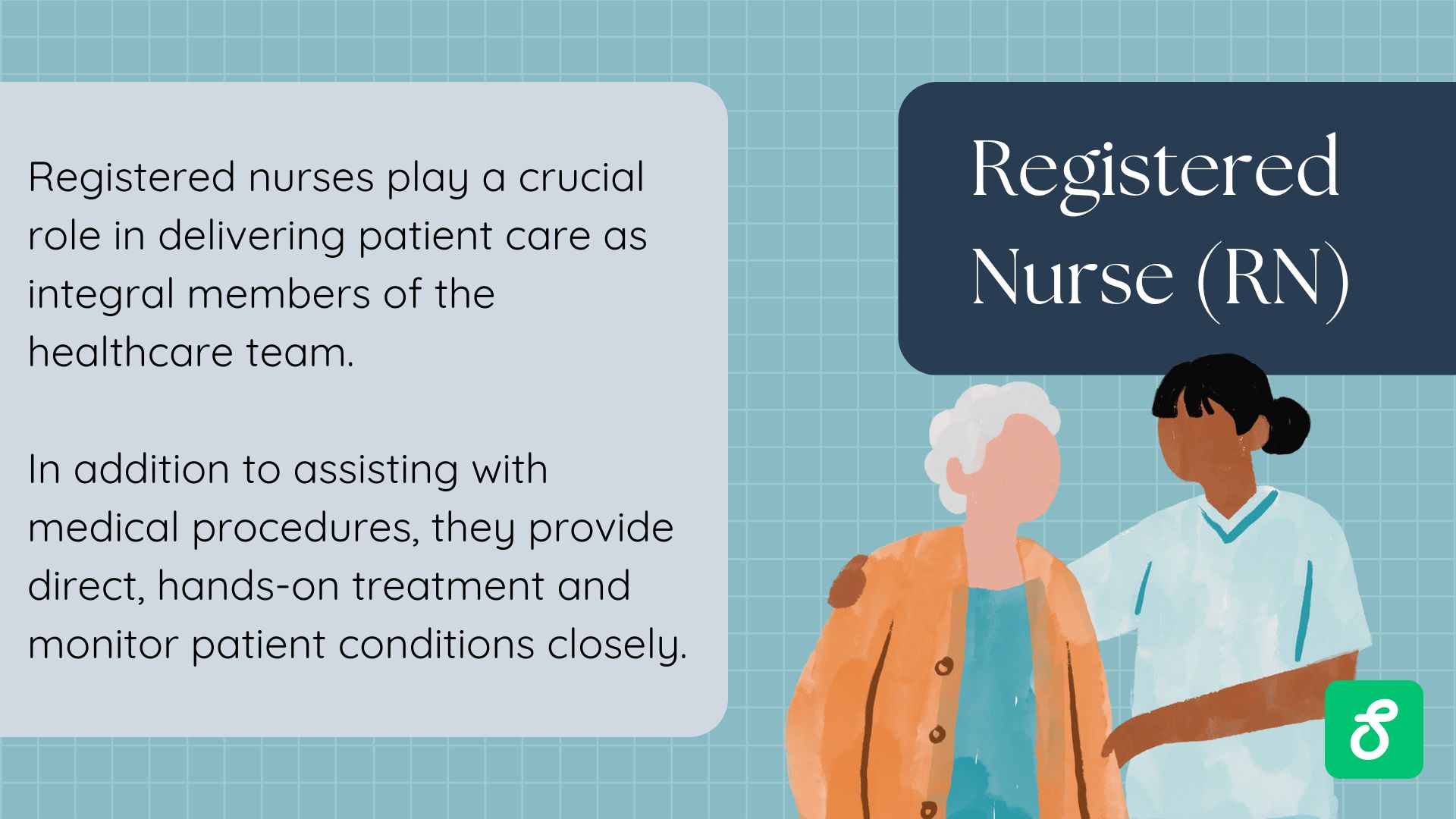
The role of a Registered Nurse is one of the most vital positions in the healthcare system.
What is a Registered Nurse?
Essential in the provision of patient care, registered nurses are members of the healthcare team. Along with helping with medical procedures, RNs directly, hands-on treat patients and oversee patient conditions. They evaluate patients and their families, write prescriptions, provide instruction, and make sure that different medical environments satisfy their needs.
An RN serves purposes beyond only providing basic care. To develop and carry out care plans catered to the patient's needs, nurses often work alongside doctors, specialists, and other healthcare professionals. This covers evaluating vital signs, giving treatments, and making sure patients grasp their course of action for recovery. Apart from working in hospitals, RNs are hired in several healthcare environments including outpatient clinics, nursing homes, colleges, and even home health facilities.
The capacity of the RN to react to medical emergencies and apply hands-on care along with clinical judgment to stabilize patients is absolutely vital. Additionally teaching patients on post-operative care, chronic condition management, and preventative health practices are RNs. Their indispensable nature in any healthcare environment stems from their capacity for clear communication with patients as well as the healthcare team.
What Education is Needed to Become a Registered Nurse?
You have to finish an approved nursing program and pass the NCLEX-RN (National Council Licensure Examination for Registered Nurses) exam to be an RN. Your long-term professional goals and the type of program you decide upon will affect the route to become an RN.
Nursing Programs
Most RN programs offer either an Associate Degree in Nursing (ADN) or a Bachelor of Science in Nursing (BSN). The ADN is a two-year program that provides the foundational knowledge and practical skills required to begin working as a nurse, while a BSN program typically lasts four years and includes additional coursework in nursing theory, leadership, research, and public health.
NCLEX-RN Licensing Exam
Upon completion of the nursing program, candidates must pass the NCLEX-RN exam to obtain their license and officially practice as a registered nurse. The NCLEX-RN is a comprehensive test that evaluates a nurse’s ability to safely care for patients in a variety of situations, including clinical decision-making, patient safety, legal and ethical responsibilities, and infection control. It ensures that the nurse has the necessary knowledge to protect patient health and safety.
Once licensed, RNs can begin their careers in different healthcare settings. However, they must maintain their licenses by completing continuing education and renewing their certification periodically as required by their state’s licensing board.
Associate Degree in Nursing (ADN)
The Associate Degree in Nursing (ADN) is a common entry-level qualification for aspiring RNs. ADN programs usually take about two years to complete and provide the essential training needed for a nursing career. ADN programs are offered at community colleges and are designed to equip students with the basic nursing skills required for patient care.
In an ADN program, students receive both theoretical and practical training. This includes:
- Anatomy and Physiology: Understanding the human body’s structure and function.
- Pharmacology: Learning about medications, dosages, and the effects on the body.
- Patient Care Techniques: Training in taking vital signs, administering injections, dressing wounds, and providing other nursing interventions.
- Nursing Theory: Understanding the science of nursing, evidence-based practices, and patient management.
During clinical rotations, students gain hands-on experience by working directly with patients in supervised settings, such as hospitals and outpatient clinics. After completing the program, students are eligible to take the NCLEX-RN exam.
RN Licensing Exam (NCLEX-RN)
After completing an accredited nursing program, the next crucial step in becoming a licensed RN is passing the NCLEX-RN exam. This exam is designed to test the knowledge and skills needed to safely and effectively practice as an RN. It covers various areas of nursing practice, including:
- Patient Care and Safety: RNs must be able to assess patients’ conditions, recognize any changes, and respond appropriately to ensure patient safety.
- Legal and Ethical Considerations: Nurses must have a solid understanding of healthcare laws and ethical principles that guide patient care, including privacy laws (e.g., HIPAA).
- Infection Control: Nurses need to know how to prevent and manage infections to protect both patients and healthcare workers.
- Health Promotion and Maintenance: RNs are also involved in educating patients about lifestyle choices, disease prevention, and healthy living.
The NCLEX-RN is a computer-based exam that uses an adaptive testing format. This means that the exam adjusts its difficulty based on the answers you provide, aiming to more accurately assess your competence. The test consists of multiple-choice questions as well as other formats, such as fill-in-the-blank, drag-and-drop, and hot spots.
Once an individual passes the NCLEX-RN exam, they are granted the license to practice as a Registered Nurse (RN) in their state. However, the work doesn't stop there; RNs must regularly renew their licenses and keep up with continuing education to stay current with advancements in healthcare practices and technology.
Career Opportunities and Job Outlook for RNs
Registered Nurses are in high demand across the country due to the ongoing need for healthcare services. According to the U.S. Bureau of Labor Statistics (BLS), employment for RNs is expected to grow by 9% from 2020 to 2030, which is faster than the average for all occupations. Nurses can pursue a wide range of specialties, including pediatrics, gerontology, emergency care, and more. The average salary for an RN is around $75,000 per year, but it varies depending on experience and location.
Bachelor of Science in Nursing (BSN) Role Overview
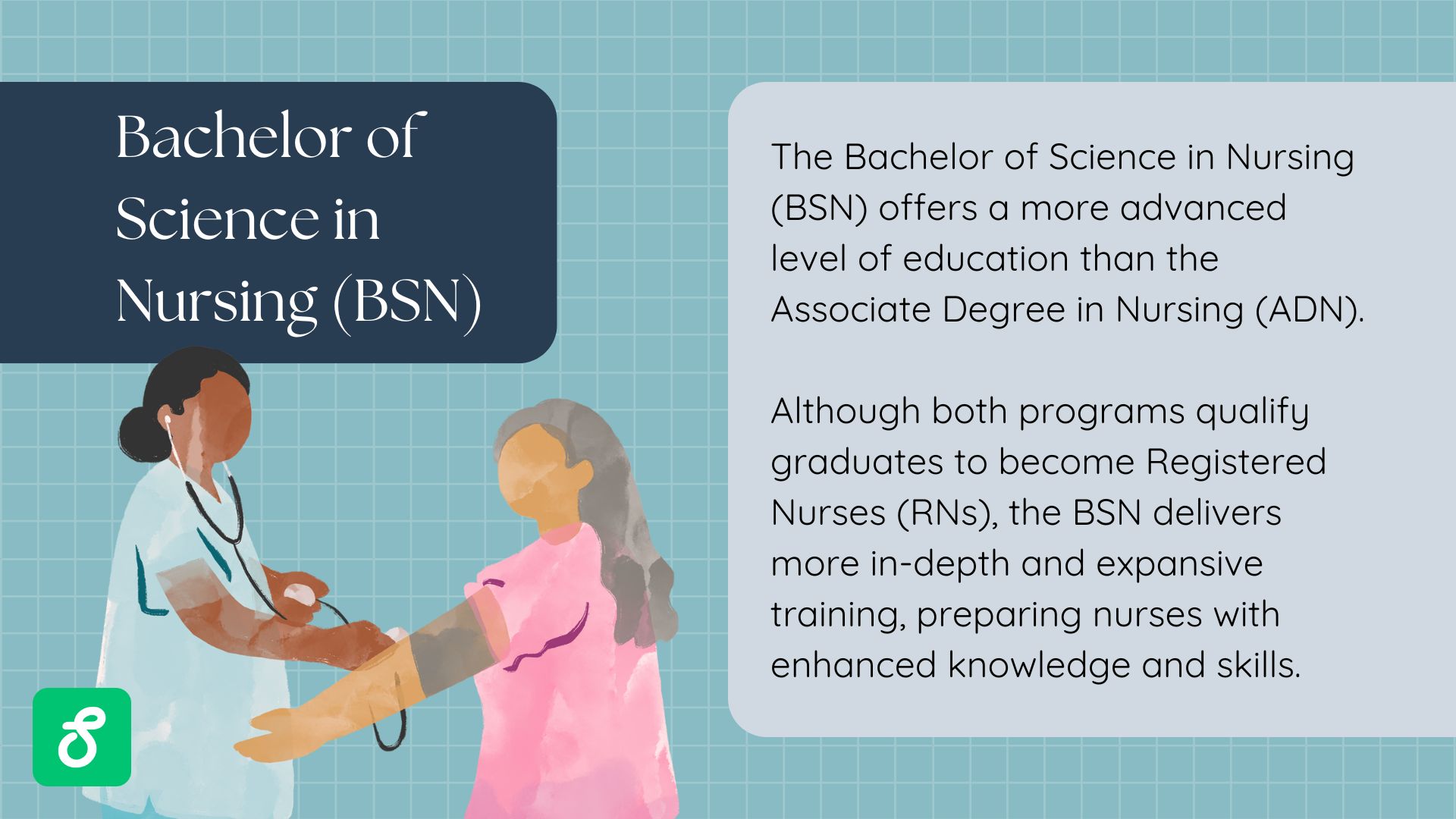
The Bachelor of Science in Nursing (BSN) represents a higher level of nursing education compared to the Associate Degree in Nursing (ADN). While both paths prepare individuals to become Registered Nurses (RNs), a BSN provides a broader and more comprehensive training that equips nurses with advanced skills and knowledge. Nurses with a BSN are not only prepared for direct patient care but also trained in leadership, research, and the promotion of public health, making them highly versatile and valuable in the healthcare field.
In this section, we will explore the BSN degree in greater detail, discussing what it entails, the educational and certification requirements, the differences between ADN and BSN programs, and the career advantages of holding a BSN.
What Does BSN Mean: Definition and Role
A Bachelor of Science in Nursing (BSN) is a four-year undergraduate degree designed to prepare nurses for a variety of roles in healthcare. The BSN curriculum goes beyond basic nursing practice to include additional coursework in nursing theory, leadership, research, public health, and patient-centered care.
The BSN degree is critical for those looking to assume leadership roles, specialize in certain areas of nursing, or pursue advanced certifications. Nurses with a BSN are often preferred by employers and are better positioned to adapt to the evolving demands of the healthcare industry. Additionally, the BSN lays the groundwork for nurses who wish to pursue higher education, such as a Master of Science in Nursing (MSN), to become nurse practitioners, nurse educators, or nurse administrators.
BSN nurses are trained to manage complex patient situations, take on supervisory roles, and contribute to evidence-based practices that improve patient outcomes. They may work in specialized fields like pediatrics, geriatrics, mental health, and oncology, or take on leadership positions that involve overseeing nursing teams or managing healthcare facilities.
Education and Certification Requirements
To earn a BSN, students must complete a program at an accredited university or college. This program typically takes four years to complete and includes a combination of classroom-based learning, laboratory work, and clinical practice. During the course of their education, BSN students study subjects like:
- Advanced patient care techniques
- Pharmacology
- Anatomy and physiology
- Public health and disease prevention
- Leadership and management principles
- Research methods in healthcare
Additionally, BSN students learn about nursing ethics and communication skills, which are crucial for working in multidisciplinary teams and interacting with patients and families.
BSN programs often require clinical rotations, where students work in real-world healthcare settings such as hospitals, clinics, and long-term care facilities. These experiences help students apply their theoretical knowledge to practice and provide hands-on training in caring for patients with diverse needs.
In some cases, individuals who already hold an Associate Degree in Nursing (ADN) may choose to pursue an RN-to-BSN program. This bridge program is designed for licensed RNs who want to earn a BSN without starting from scratch. The RN-to-BSN pathway typically takes about one to two years to complete and focuses on expanding the RN’s knowledge of leadership, research, and advanced clinical skills.
Differences Between ADN and BSN Programs
While both ADN and BSN programs prepare students to become Registered Nurses, there are several key differences in their content and outcomes:
- Length of Program: ADN programs usually take two years to complete, whereas BSN programs take four years.
- Curriculum Focus: ADN programs are more focused on clinical skills and technical training, while BSN programs provide a more comprehensive education that includes nursing theory, research, and leadership.
- Career Opportunities: BSN nurses are often better positioned for leadership roles, such as charge nurse or nursing supervisor, and are more likely to be considered for specialized fields or advanced practice roles. ADN nurses may be limited to more general patient care roles.
- Preparation for Advanced Education: A BSN serves as a foundation for those interested in pursuing an advanced degree like a Master of Science in Nursing (MSN), while ADN programs do not provide the same level of preparation for graduate-level studies.
Ultimately, while both degrees lead to becoming a Registered Nurse, the BSN provides more opportunities for career advancement, specialization, and leadership.
Advantages of Having a BSN
Holding a BSN degree offers many benefits, both personally and professionally. Some of the key advantages include:
- Expanded Career Opportunities: Many healthcare institutions now require or strongly prefer a BSN for hiring or promotion. A BSN opens doors to a variety of roles, including management positions, educational roles, and specialized clinical areas.
- Higher Earning Potential: Nurses with a BSN typically earn higher salaries than their ADN counterparts. This is particularly true for those who take on leadership roles or work in specialized fields that require additional training.
- Preparation for Advanced Practice: A BSN provides the foundation needed for those who wish to pursue advanced nursing roles, such as nurse practitioner (NP), nurse educator, or nurse administrator, by continuing their education with a Master of Science in Nursing (MSN).
- Leadership and Management Opportunities: With additional training in leadership, nurses with a BSN are better equipped to take on management positions, supervise nursing teams, and oversee patient care programs. They are also better prepared to advocate for improved healthcare practices and patient outcomes.
- Increased Job Stability: As more healthcare institutions adopt the Institute of Medicine’s (IOM) recommendations, which advocate for increasing the proportion of nurses with a BSN, having a BSN may provide job stability and better prospects in the competitive healthcare job market.
- Improved Patient Outcomes: Research has shown that hospitals with a higher percentage of BSN-prepared nurses tend to have better patient outcomes, including lower mortality rates and fewer complications. This is because BSN nurses are trained to apply evidence-based practices and have a deeper understanding of the complexities of patient care.
Career Opportunities and Job Outlook for BSN Graduates
Often paid more than their ADN colleagues, BSN nurses are in great demand. With prospects in specialized care, administration, and public health, the job picture for BSN graduates is likewise bright. A BSN nurse's average annual pay as of 2021 is about $80,000; many jobs pay for health insurance and retirement plans as well.
Master of Science in Nursing (MSN) Role Overview
What is Master of Science in Nursing?
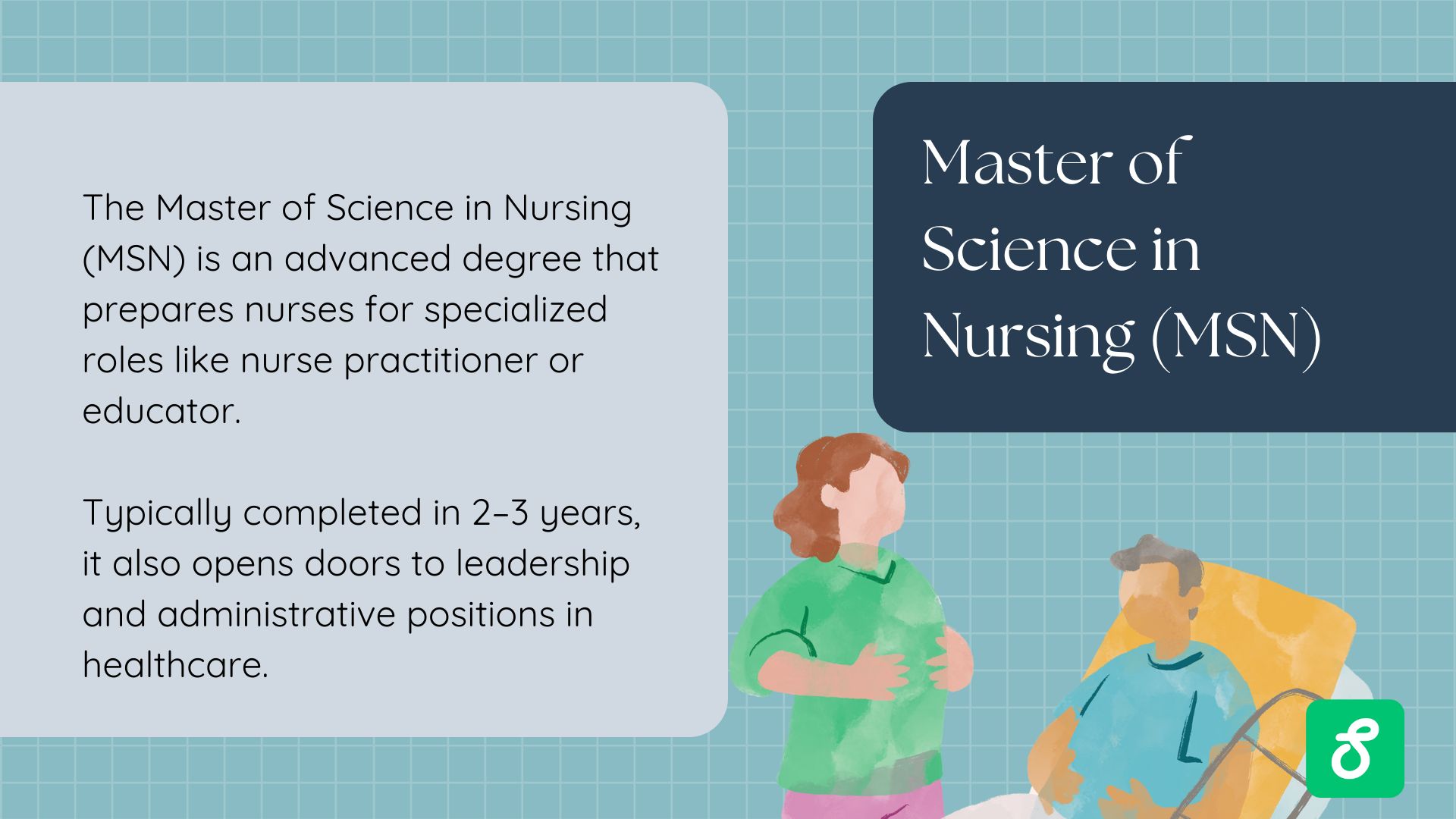
An advanced-level degree, a Master of Science in Nursing (MSN) lets nurses specialize even more in their specialty. Designed for those who want to pursue advanced practice roles, such as nurse practitioners, clinical nurse specialists, or nurse educators, MSN programs usually demand 2-3 years of study and are often focused on administrative roles inside healthcare institutions. Nurses with an MSN degree are ready for leadership roles.
Master of Science in Nursing Education Requirements
To pursue an MSN, nurses typically need to have a BSN and relevant work experience as an RN. The curriculum includes advanced coursework in nursing practice, healthcare leadership, research methods, and evidence-based practice. Students may also choose a specialization, such as Nurse Practitioner (NP), Nurse Educator, or Nurse Administrator.
Advanced Practice Registered Nurse (APRN) Specializations
One of the key reasons many nurses pursue an MSN is to become an Advanced Practice Registered Nurse (APRN). APRNs include:
- Nurse Practitioners (NPs): NPs are trained to provide primary and specialty care, prescribe medications, and diagnose illnesses.
- Clinical Nurse Specialists (CNSs): CNSs are experts in specific areas of nursing practice and often take on roles in patient care management and education.
Nurse Practitioner (NP) Programs
NP programs are one of the most popular MSN tracks, allowing nurses to work in specialized areas such as family practice, pediatrics, geriatrics, and psychiatric nursing. NPs have a high level of autonomy and can work independently in many states, providing healthcare services to patients without direct supervision from a physician.
Clinical Nurse Leader (CNL) Programs
Clinical Nurse Leaders (CNLs) are trained to lead teams of nurses in clinical settings. They focus on improving patient care quality, managing resources, and promoting evidence-based practices within healthcare facilities.
Advantages of Having an MSN
An MSN degree offers numerous benefits, including the ability to specialize in a particular area of nursing, increase your earning potential, and open doors to leadership and academic positions. Nurses with an MSN are often seen as experts in their fields and are highly valued by healthcare organizations.
Career Opportunities and Job Outlook for MSN Graduates
With many prospects in specialized care, leadership, and education, MSN graduates have an especially great work outlook. Advanced practice nurses—such as Nurse Practitioners—should expect to make upwards of $110,000 a year. The demand for MSN-prepared nurses is expected to grow as healthcare systems focus on improving care and increasing access to services. As healthcare systems concentrate on enhancing treatment and widening access to services, the demand for MSN-prepared nurses is predicted to rise.
Key Differences Between RN, BSN, and MSN
Although RN, BSN, and MSN nurses are all very important for patient care, their educational background, degree of expertise, and career paths really define them. While BSN nurses have a more advanced degree and training, MSN nurses have specific knowledge and leadership skills; RNs hold an entry-level nursing license. From RN to BSN and then to MSN, the path will greatly improve your career by adding more responsibility, more income, and more job satisfaction.
| Qualification | Education Required | Key Responsibilities | Career Opportunities | Salary Range | Ideal for |
|---|---|---|---|---|---|
| Registered Nurse (RN) | Associate Degree in Nursing (ADN) or Diploma in Nursing + NCLEX-RN Exam | Direct patient care, administering medications, monitoring vital signs, collaborating with doctors | Hospitals, clinics, nursing homes, schools, outpatient care | $60,000 - $90,000 per year (varies by location, experience) | Those looking for a hands-on, patient-focused role in healthcare |
| Bachelor of Science in Nursing (BSN) | Bachelor’s Degree in Nursing (4 years) | Leadership, advanced patient care, health promotion, nursing research, more complex case management | Leadership roles (charge nurse, nurse manager), specialized areas (ICU, pediatrics, public health) | $70,000 - $100,000 per year (varies by location, experience) | Nurses who want more career advancement, specialization, or management roles |
| Master of Science in Nursing (MSN) | Master’s Degree in Nursing (2-3 years post-BSN) | Advanced practice roles, leadership, education, healthcare policy, research | Nurse Practitioner (NP), Clinical Nurse Specialist (CNS), Nurse Educator, Nurse Administrator | $90,000 - $130,000 per year (varies by specialization, location) | Nurses wanting to specialize, lead, teach, or influence healthcare policies |
Final Words
Knowing the distinctions between RN, BSN, and MSN certifications will help you whether your professional path calls for advancement or you are just beginning in nursing. Every phase of your nursing education creates fresh chances for both professional and personal development. Starting anywhere, a job in nursing has countless opportunities to serve others and significantly influence the healthcare system.
FAQ
What are the benefits of earning an MSN degree?
Having an MSN degree lets you pursue leadership or advanced practice positions, boost your earning potential, and specialize.
What Does MSN Stand For?
Master of Science in Nursing, or MSN, is a graduate degree granting nurses more ability to specialize.
What is the Difference Between BSN and RN?
The primary distinction is that whereas RNs usually earn a two-year associate degree, BSN nurses have a four-year degree.
What are the salary differences between RN, BSN, and MSN?
Depending on their position and specialty, RNs usually make about $75,000; BSN nurses make about $80,000; and MSN nurses can make over $110,000 yearly.
Can I pursue an MSN if I already have a BSN?
Indeed, pursuing an MSN usually requires a BSN, which also offers the fundamental background required for advanced nursing practice.