

16 min
0
09.02.2025

Key Points
- A survey report compiles contemporary research to elucidate trends, deficiencies, and transformations within a specific domain.
- The most crucial thing you can do to be successful is to pick a precise, researchable topic.
- Putting sources together by theme instead of author makes things easier to understand and more coherent.
- An outline helps you keep your thoughts straight and stops you from saying the same thing over and over.
- Synthesis and comparative analysis are very crucial for academic depth.
- Revising attentively makes things clearer, better organized, and more correct when it comes to citations.
- You can work faster and better if you use apps like Zotero, Litmaps, and Grammarly.
- Key Points
- What Is a Survey Paper?
- There Are Many Different Sorts of Survey Papers
- How to Write a Survey Paper
- Steps for Writing a Survey Paper
- Step 1: Choose a Subject
- Step 2: Make Plans
- Step 3: Read the Books
- Step 4: Sort Sources by Topic
- Step 5: Write down What You Want to Say in Your Paper
- Step 6: Write the Start
- Step 7: Write the Body
- Step 8: Look at the Differences and Similarities
- Step 9: Write the End
- Step 10: Change and Fix Things
- Things You Shouldn't Do
- Tools and Resources for Writing Surveys
- Survey Paper Topics and Examples
- Commonly Asked Questions
- Conclusion: Final Thoughts
What Is a Survey Paper?

As scholars, we often come across a wide variety of academic writing styles, each of which serves a different purpose. What is a survey paper, and why is it vital for research these days? A survey paper is an in-depth academic piece that gathers together all the studies that have already been done on a specific topic or area.
It doesn't offer new experimental data or the results of one study. Instead, it gives an overview of new ideas, trends, controversies, and methodologies in a certain field. Its goal is to let the reader, who is usually another researcher, practitioner, or student, know what is known right now and what questions need to be answered in future studies.
A survey paper is not the same as a conventional research piece because it doesn't test a specific hypothesis or publish fresh data. Instead, it seeks to put a lot of current studies in order, compare them, and put them in perspective.
It's like a well-organized map that depicts both the academic area and the areas that haven't been explored very much yet. That's why survey articles are particularly helpful in subjects that change quickly, like psychology, climate science, and AI.
Researchers in these areas need to quickly learn about all the existing discoveries before they can recommend new ones. A well-conducted survey study is an essential resource for both novice and seasoned researchers, regardless of their field in STEM or the social sciences.
There Are Many Different Sorts of Survey Papers
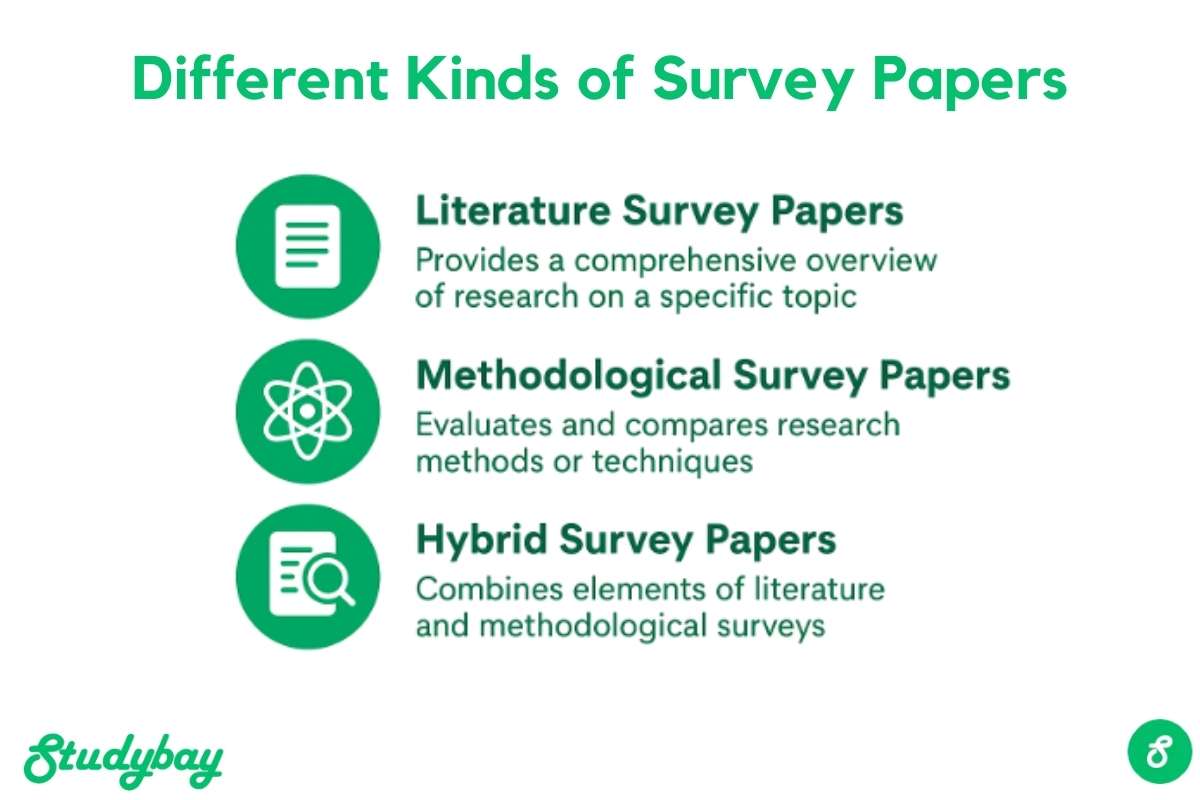
A survey study paper might look like one kind of paper, but in real life, it might look like many various things depending on what the paper is for. It's not only a matter of taste when it comes to picking the proper type; it also changes how you look for literature, put your paper together, and discuss your results. Let's speak about the three most common types of survey papers and when each one is best.
- Literature Survey Papers: This is the most popular kind of survey paper. It organizes and combines the findings of earlier investigations on a particular topic in order to provide readers with a full understanding of the field. Literature reviews are an excellent way to learn about study trends, what people agree and disagree on, and what requires additional research. For example, a literature review of the use of AI in diagnostic imaging can look at important studies, compare their results, and talk about emerging technologies that are becoming more popular.
- Methodological Survey Papers: Methodological surveys don't look at what academics have studied; instead, they look at how such studies were done. They evaluate and compare the research procedures, equipment, or tactics utilized among studies within a discipline. This type of survey is quite useful in sectors where the level of methodological rigor changes, like studies that look into how social media affects people's mental health. A methodological survey could analyze the many scales utilized to evaluate digital well-being or investigate the influence of sample size and design on reported results.
- Hybrid Survey Papers: Hybrid surveys are a combination of literature reviews and methodological reviews. They examine how the results of different studies were attained as well as the results themselves. Researchers in new or cross-disciplinary fields often employ this strategy since they need to know both the content and the study plan. A mixed-methods survey that examines the potential of blockchain to enhance supply chain management could be considered. The article might look at the major findings on transparency and efficiency, as well as how different authors used surveys or case studies.
Each type of survey research paper serves a distinct academic objective. What you want to learn from your research can help you decide which one to use: to make the material clearer, to evaluate the methodology, or both. No matter what you select, the most important thing is to stay focused and make sure that your analysis matches with what the article is designed to give to the field.
How to Write a Survey Paper

Having a clear structure is one of the most crucial features of writing for school. Following a standard format for your survey paper makes sure that it is both ordered and academically sound. The format of your work should be the same no matter what style you select for citations, whether it's APA, MLA, or Chicago. Here is a summary of the most significant things that make up an excellent survey paper.
- This part talks about the problem, specifies the parameters of your survey, and tells you why it's vital. You will normally start by saying what your major research question or purpose is, defining key terms, and giving some background on the topic in an academic way.
- You bring together and summarize papers that are connected to your subject in the literature review. Instead of listing each study one by one, put the literature into groups based on topics, methodologies, or the order in which they were published. This is the most important element of your survey paper.
- Methodology (for Methodological or Hybrid Surveys): This component of the survey tells you how you chose the papers to include, what databases or keywords you used, and how you planned to rate them. This might not be in surveys that only look at literature.
- Thematic Sections (Body of the work): Depending on how your work is structured, you can group the primary ideas into chronological or conceptual categories. Every segment should look at patterns, arguments, and noteworthy findings that are all connected to your core point or aim.
- Comparative Analysis (Optional but Recommended): A distinct section to compare methods, outcomes, or hypotheses can make the work more intriguing. Point out where people agree, disagree, and don't know what to do.
- Discussion: This part of the article talks about your results in relation to the larger field of research. What are the new fashions? What areas need more study? You can also discuss any restrictions or variables in this section.
- In the end, you should restate the main aspects of your piece, stress how essential it is, and recommend topics for more research. Make this segment short and focused on what's to come.
- Write down all the sources you utilized in the format that your school or the journal you want to get published in needs. Check that the formatting is the same and that all the citation information is there.
- If necessary, appendices should include more information, such as data tables, coding systems, or lists of research that were included. This is especially important if your survey has systematic selection criteria.
It demonstrates that you care about your job when you write in a neat, well-organized way. It's crucial to keep the parts of your survey report connected, no matter what the topic is, so that it both informs and engages.
Steps for Writing a Survey Paper
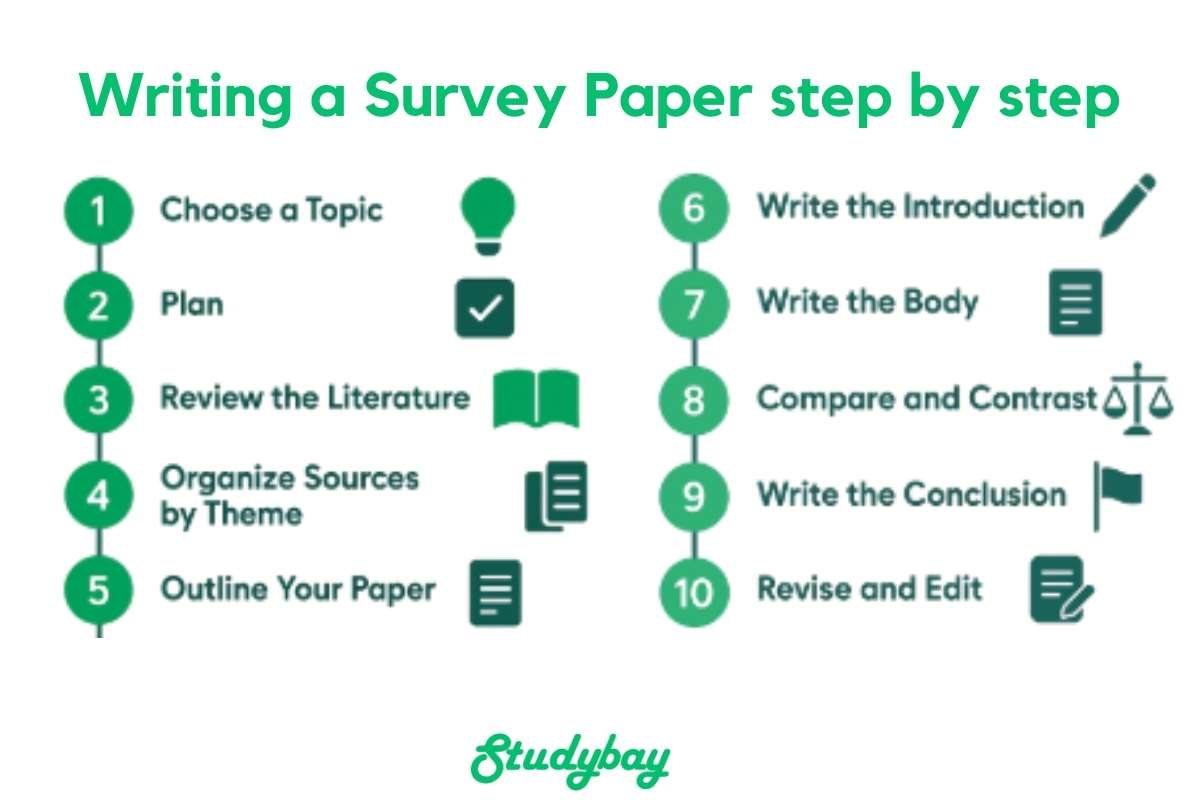
A survey paper is a type of writing that requires investigation, arranging material, and putting together different bits of information. Follow these ten crucial steps to write a paper that is smart and well-organized.
Step 1: Choose a Subject
Choosing the right topic is the first step to producing an effective survey report. Pick a subject that is important in school, intriguing to you, and has a lot of previous research backing it up.
Consider novel issues or under-researched domains within your expertise, such as the application of AI in education or the impact of remote work on mental health.
Do not choose topics that will be too broad for you to research or that will be too narrow for you to conduct a thorough literature review. An excellent topic will help you stay on track with your study.
Step 2: Make Plans
After you decide on a topic, the next step is to define clear research goals. What do I actually want to learn, show, or put together in my paper? You can look for patterns, compare methods, or say where more information is needed as your goal.
For instance, "How have remote learning platforms affected student engagement in higher education?" can help you turn your goal into a specific research question. These goals will affect every choice you make, from what books you read to what you think at the end.
Step 3: Read the Books
To begin, use Google Scholar, JSTOR, or Scopus to identify trustworthy academic sources. Focus on academic articles that have been peer-reviewed and recent publications that are related to your topic.
Write down the goal, methods, results, and theoretical framework of each study in detail as you read. Find subjects or arguments that keep coming up. These patterns will be vital for your synthesis.
Don't put too much faith in sources that are ancient or not scholarly. Instead, look for materials that explicitly support the goals of your argument.
Step 4: Sort Sources by Topic
Instead of writing a synopsis of each study, put the literature into groups based on similar topics, methods, or research goals. For example, you may group research on online learning by the kind of assessments offered, the types of platforms used, or the results for students.
Grouping these by theme makes it easier to see wider trends and outcomes that don't match up, which sets the stage for a well-organized body section. Tables and concept maps are two examples of visual tools that can help you see how things are connected before you start writing.
Step 5: Write down What You Want to Say in Your Paper
One of the finest ways to speed up your writing is to make a detailed outline. The key elements of your writing are usually the Introduction, Thematic Body Sections, Discussion, and Conclusion. Write them down. Then, put out the primary points or proof you plan to use in each section.
A good outline helps you stay on track when you write by keeping things logical, stopping you from repeating yourself, and making it easier to stay on course. Use it as a guide to write a survey paper that is well-organized and meets academic standards.
Step 6: Write the Start
Begin your work with an introduction that makes it clear what the subject is and why it matters in your field of study. Tell us exactly what your survey will cover and what it won't. Then, say what your major research topic or purpose is.
If you need to, clarify any technical terms or frameworks. To help the reader be ready for the detailed analysis, end the introduction with a brief summary of the paper's structure.
Step 7: Write the Body
The main body of your paper should be based on the concepts or themes you came up with earlier. For each portion, put together relevant research by describing the most essential findings, pointing out what they have in common or what makes them different, and explaining why they are important.
Instead of just listing sources, explain how they all contribute to the achievement of your research objective. To retain the flow and continuity, make sure that each section has a clear transition. This is where your analytical skills help us understand the area better and more deeply.
Step 8: Look at the Differences and Similarities
After you have exhibited your grouped literature, make sure there is enough space for important comparisons and differences between the studies. Do the results accord with each other or not? Do comparable methods lead to different results, or do the same issues continually show up in the research?
Pointing out these kinds of trends not only demonstrates where the literature is deficient and where there are flaws, but it also shows that you are critically invested in the topic. A strong comparative analysis makes your survey more than just a summary; it makes it a contribution to academia.
Step 9: Write the End
In your conclusion, go back to what you wanted to learn from your study and list the most essential items you discovered from your review. Stress how your synthesis helps people understand the topic and bring out any patterns, conflicts, or gaps that keep coming up.
Don't bring up new sources or arguments; instead, reflect about what the complete body of work shows. Finally, suggest areas for future research that could help address questions that haven't been answered yet or deal with new problems in the field.
Step 10: Change and Fix Things
Before you submit in your survey paper, make sure you read it carefully. Check that your arguments fit with your goals, that the structure flows logically, and that the citations are correct and consistent. Make it clear, short, and scholarly.
You can use Grammarly and other tools, but don't rely on them alone. Reading out loud or gaining comments from peers usually reveals issues that software might miss. With thorough editing, a decent draft can turn into a finished piece that can be published.
If you follow this systematic plan, you'll write a survey article that not only integrates existing research but also gives you useful academic insight, which is a worthwhile addition to your area.
Things You Shouldn't Do

Even well-meaning survey papers can fail if you don't follow a few essential academic principles. Here are some typical mistakes and how to avoid them.
- Unclear Goals: If you don't know what you want to learn from your investigation, your analysis will go wrong. Make your goals clear from the start.
- Bad Thematic Structure: If you organize your paper by source instead of theme, your writing will be all over the place. Group studies based on ideas.
- Too Much Dependence on One Source: Your results may be inaccurate if you rely too much on one author or study. Be as broad and balanced as you can.
- Not Synthesizing: If you just describe articles without thinking about how they fit together, your argument is weaker.
- Not Taking Different Points of View into Account: A good poll includes both sides of the topic to maintain neutrality.
- Incorrect Citation or Formatting: If you don't use the same citation style throughout the paper, it may not be as believable. Look at the references again.
- Not Revising: If you turn in a first draft without fixing it, it could still have grammar issues, holes in logic, and bad phrasing. You should always look at your work again with fresh eyes.
Before you submit in your work, use this list to make sure it's good enough. Your survey report will be a lot better organized, clearer, and more valuable for school if you avoid these blunders.
Tools and Resources for Writing Surveys
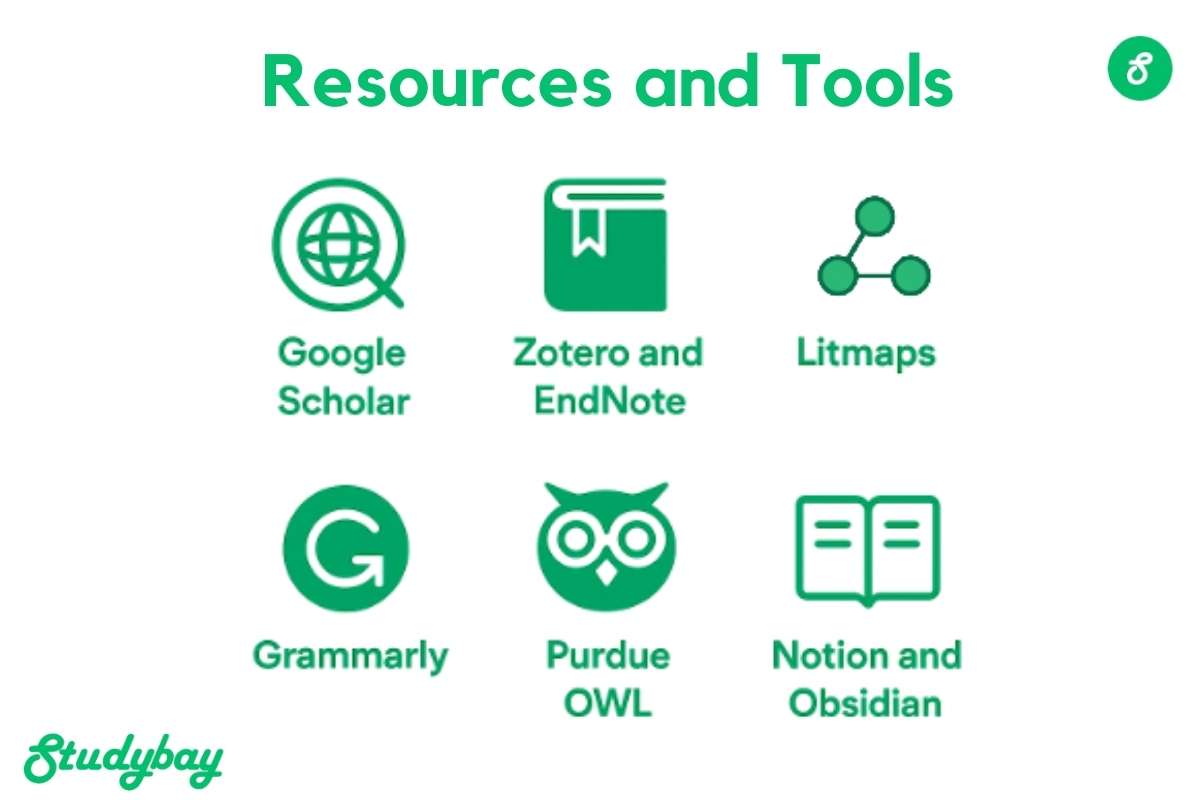
The right tools can make a major difference in how well-organized and useful your survey report is. Here are some academic resources that can help you with your assignment from beginning to end:
- Google Scholar is the greatest place to look for peer-reviewed articles from a variety of topics.
- Zotero and EndNote are tools that help you collect, organize, and format references in whatever way you need.
- Litmaps is a tool that shows you how academic papers are connected and helps you locate groups of similar research.
- When you revise, Grammarly can help you uncover faults with grammar, tone, and clarity, but it shouldn't take the place of peer review.
- Purdue OWL is a good place to go for rules on how to format in APA, MLA, and Chicago styles.
- Notion and Obsidian are digital note-taking apps that help you construct outlines and categorize sources by theme.
These tools won't write your paper for you, but they will help you stay organized, save time, and make sure your writing is up to academic standards.
Survey Paper Topics and Examples
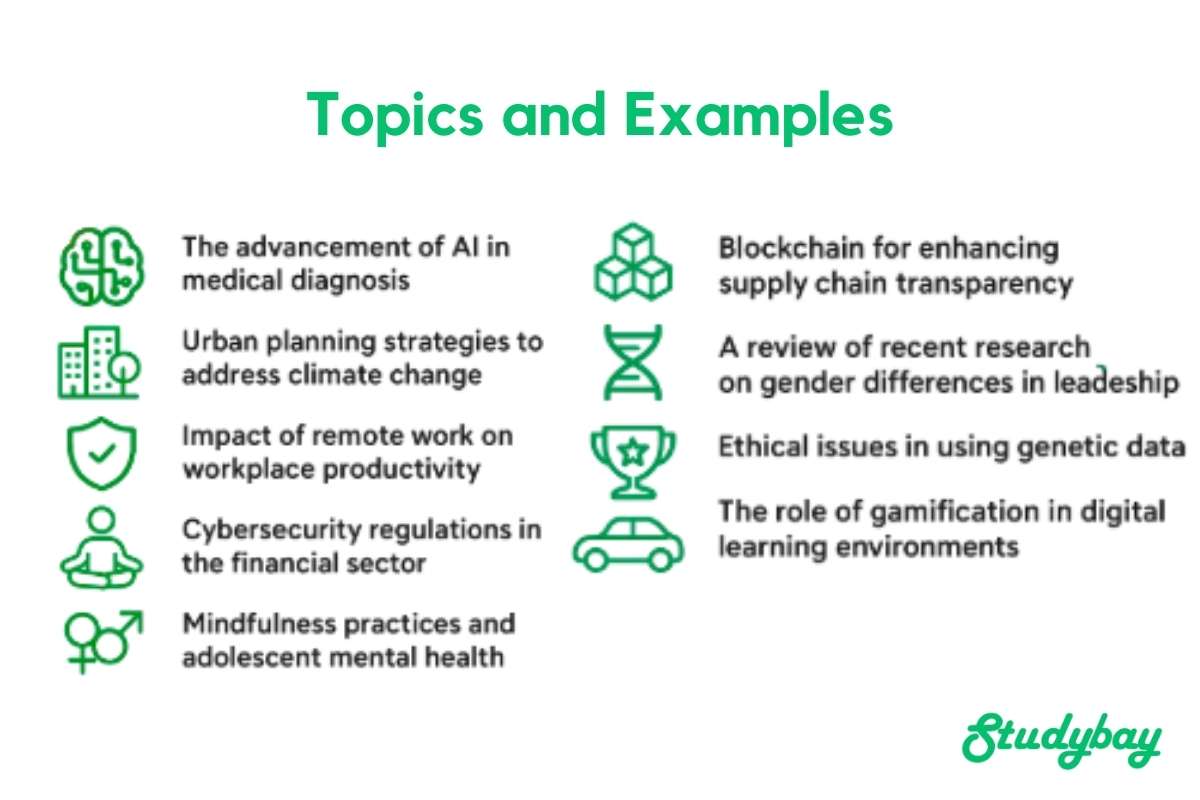
You need to strike a balance between what interests you, what is important to your studies, and what is available in the literature when you choose a decent topic for your survey paper. Here is a list of possible topics from different fields that could be used to write a literary, methodological, or mixed-methods survey research.
- The advancement of AI in medical diagnosis
- City planning strategies for dealing with climate change
- How working from home affects productivity at work
- Rules for cybersecurity in the financial sector
- Mindfulness practices and their effect on the mental health of teenagers
- Blockchain helps make the supply chain more open.
- A summary of the latest findings on how men and women lead differently
- Ethical issues in utilizing genetic information
- The role of gamification in digital learning environments
- A cross-cultural analysis of perceptions regarding autonomous vehicles
Use these examples to come up with or develop your own topic, ensuring it matches what you want to learn and the academic sources you have.
Commonly Asked Questions
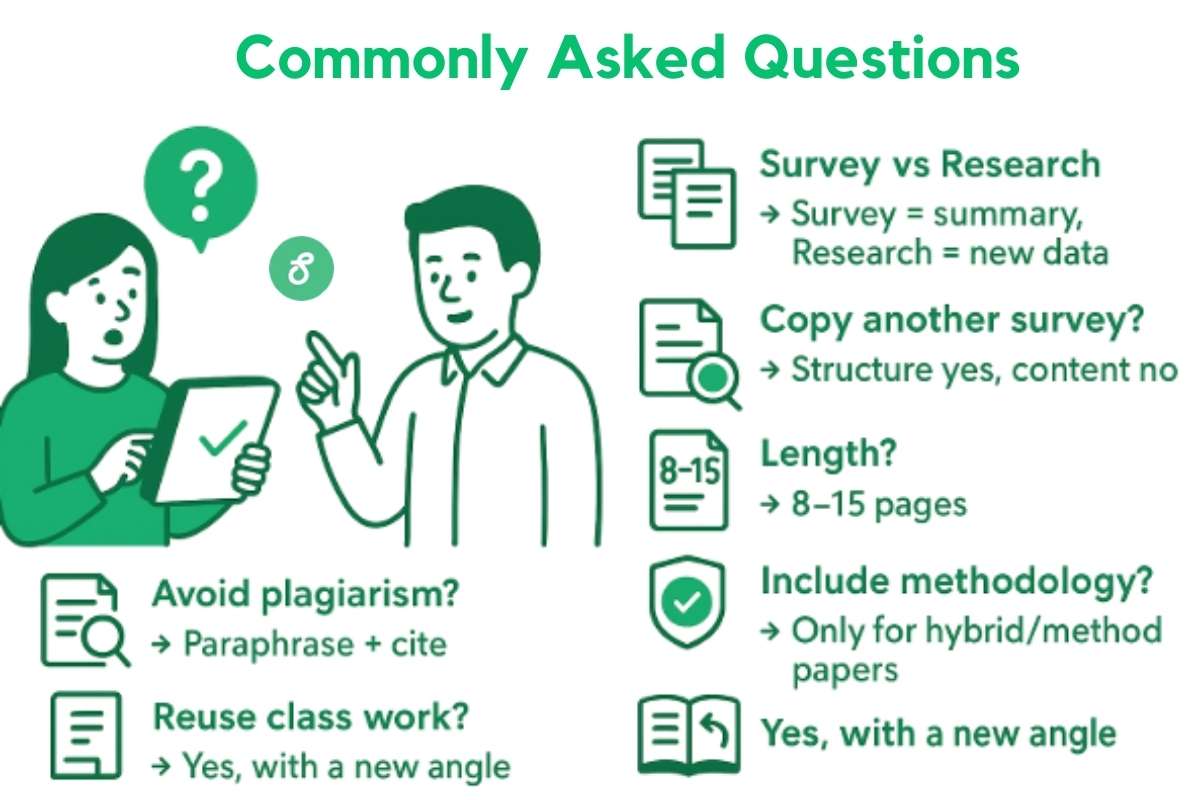
1. What makes a survey paper different from a conventional research paper? A survey article looks at and sums up existing research on a specific topic. A standard research article, on the other hand, frequently displays new findings based on new data. Survey papers don't present fresh research; instead, they compile existing knowledge on a topic.
2. Is it appropriate to use someone else's survey study as a model? You can look at existing survey papers to see how they are set up and formatted, but the information in yours must be new. It could be deemed academic dishonesty to use someone else's ideas or structure without giving them credit.
3. How long should a normal survey paper be? Most undergraduate-level survey reports are 8 to 15 pages in length, but this might change from school to school and field to field. Not simply the number of words, but also how clear, deep, and well-structured they are.
4. Should I provide methodology in a survey paper? If you're making a methodical or hybrid survey, you should explain how you picked, sorted, and looked at the items. This part might not be necessary or might be very short for surveys that only look at literature.
5. When I create a survey paper, how can I make sure I don't mistakenly copy someone else's work? Put together information from several sources in your own words, and always give credit to the people whose ideas you use. You can use plagiarism checkers like Turnitin or Grammarly to make sure your work is original.
6. Can I use something I learnt in another class? Yes, but only if your new publication presents a different point of view or a more in-depth synthesis. Always ask your teacher if the topic is appropriate and distinct enough from what you've done before.
Conclusion: Final Thoughts

Writing a survey paper is a good academic exercise that helps you learn more about a topic and get better at research and analysis. You earn both academic credibility and understanding of the subject by following a clear process, from picking a topic that interests you to putting together the literature and explaining your discoveries. You may now create a survey paper that is complete, well-organized, and offers something useful to your topic.