
18 min
0
09.01.2025

Key Takeaways
- A mission statement makes it clear, easy to remember, and easy to understand what your organization does, who it serves, and how it does it.
- It is different from a vision (a goal for the future) and values (the things that guide you), yet all three work together to make a brand's identity.
- Every firm should have one, especially when they start, when they rebrand, or when they are growing quickly.
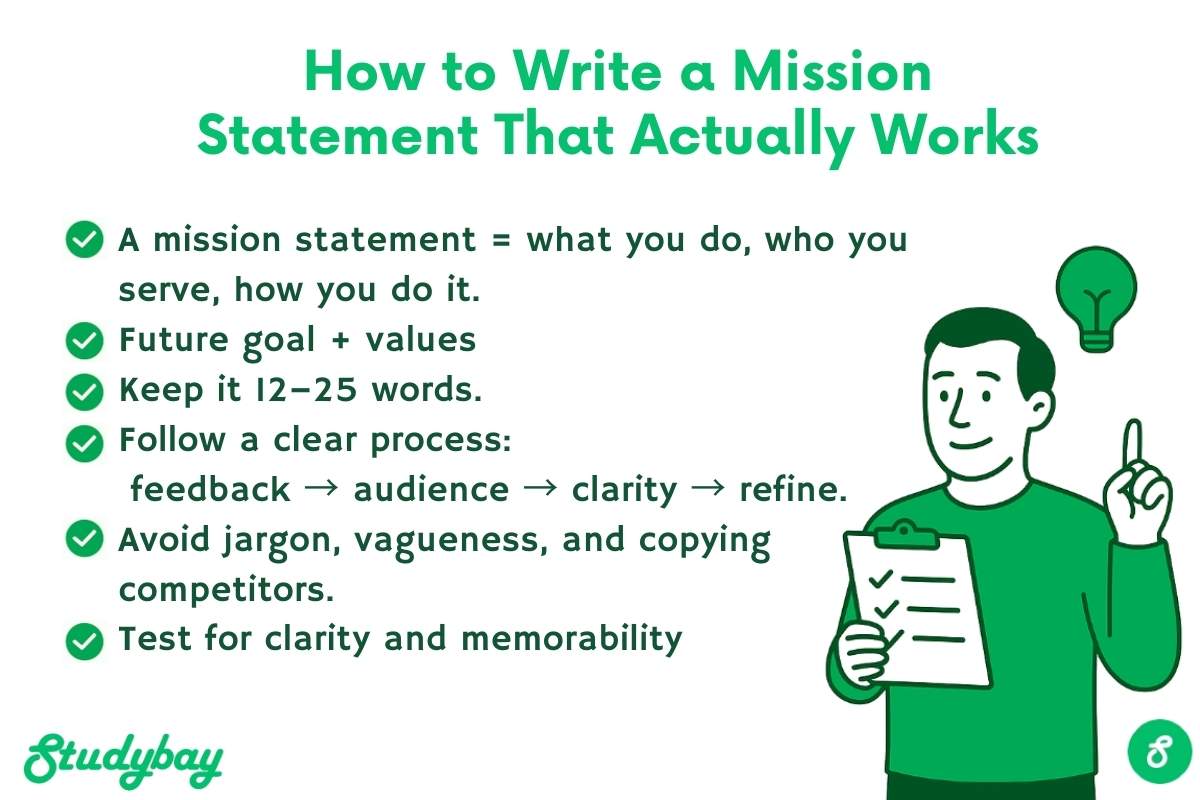
- Keep it short, between 12 and 25 words, to make sure it is clear and powerful.
- Follow a set plan: get feedback, figure out who your audience is, make your message clearer, and improve.
- Don't make frequent blunders like being ambiguous, using jargon, or mimicking your competition.
- Check your statement for clarity, memorability, and inspiration, and then read it again and again to keep it up to date.
- Key Takeaways
- Core Values, Mission Statement, and Vision Statement
- What Is a Statement of Purpose?
- What Is the Purpose of a Mission Statement?
- Who Should Be in Charge of Writing the Mission Statement?
- When to Write or Change Your Mission Statement
- How to Write a Mission Statement in Steps
- How to Find Out Whether Your Mission Statement Works
- Things to Stay Away From
- What Makes a Good Mission Statement
- Examples of Mission Statements by Industry
- Tools for Making Mission Statements
- Questions and Answers About Writing a Mission Statement
- Is It Possible for a Mission Statement to Be Too Bold or Controversial?
Every founder has to deal with the same thing: looking at a blank page and trying to figure out how to craft a mission statement that really captures what their firm does. It's not about using big words or replicating the style of Fortune 500 companies. It's about finding a few simple words that explain what your firm does and where it's heading. Tesla's whole aim can be summed up in just 12 words: "To speed up the world’s shift to renewable energy."
This tutorial will help you write a mission statement that works in the real world. It will motivate your staff, connect with your consumers, and keep your strategy on track. As a brand strategist, I'll show you proven steps, real-life examples, and things to avoid so you can go from being unsure to being sure.
Core Values, Mission Statement, and Vision Statement
It's easy to mix together mission statements, vision statements, and core values when you're establishing your brand. They all sound similar, but they have different uses.
A mission statement tells people what your company does and why it exists.
A vision statement is a picture of the future you want to make happen.
Core values, on the other hand, are the beliefs and concepts that help you make decisions every day.
These three statements make up the core of your brand strategy.
| Part | Goal | Sample |
|---|---|---|
| Statement of Purpose | Tells you what you do and who you do it for | Tesla: "To speed up the world's switch to clean energy." |
| Statement of Vision | Tells you what you want to build in the future | "Spread ideas," says TED. |
| Basic Values | Shows the values that shape your actions | The Red Cross stands for humanity, fairness, neutrality, independence, voluntary service, unity, and universality. |
Think about how these ideas work in real life: Google's mission is to "organize the world's information and make it universally accessible and useful," while its vision focuses on new ideas for the future. The Museum of Modern Art (MoMA) has a mission to promote modern art, but its ideals are more focused on teaching and including people from different cultures. Each item fits with the others to make a clear framework that guides both short-term decisions and long-term aspirations.
What Is a Statement of Purpose?
A mission statement is a short statement that explains what your company does, why it exists, and who it serves. The easiest way to start a mission statement is to think about what you want to say before you worry about how it sounds.
It's not a brilliant tagline or a marketing slogan; it's the core of your brand's identity. A slogan could get people's attention, but a mission statement helps you make decisions and keeps your company on the same page.
The nonprofit Compass SBC says that a mission statement is "a simple statement of an organization's main purpose and focus." BoardEffect says that the best ones have qualities including being clear, short, and real.
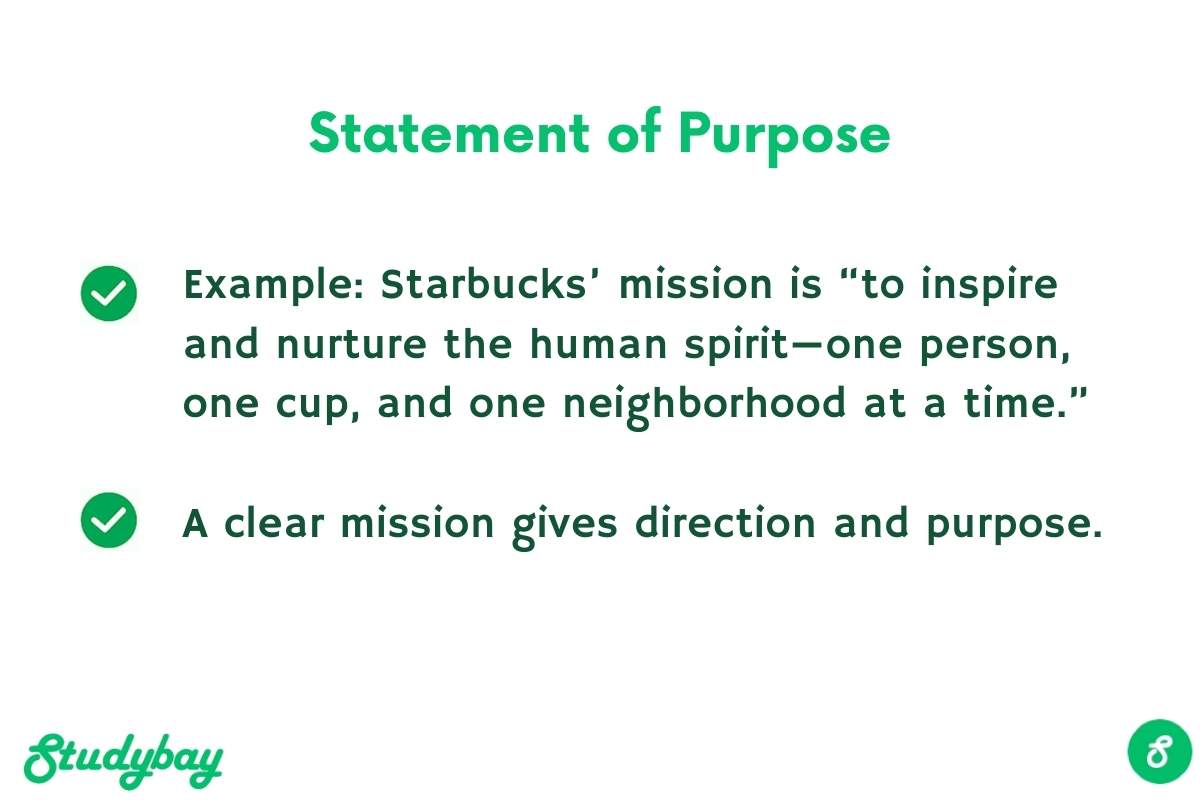
Starbucks' aim is "to inspire and nurture the human spirit—one person, one cup, and one neighborhood at a time." This is different from its snappy tagline, "It's not just coffee." "It's Starbucks," the mission goes deeper into purpose. By giving your company a clear mission statement, you give it a direction for both strategy and culture, making sure that every choice is based on why your brand exists.
What Is the Purpose of a Mission Statement?
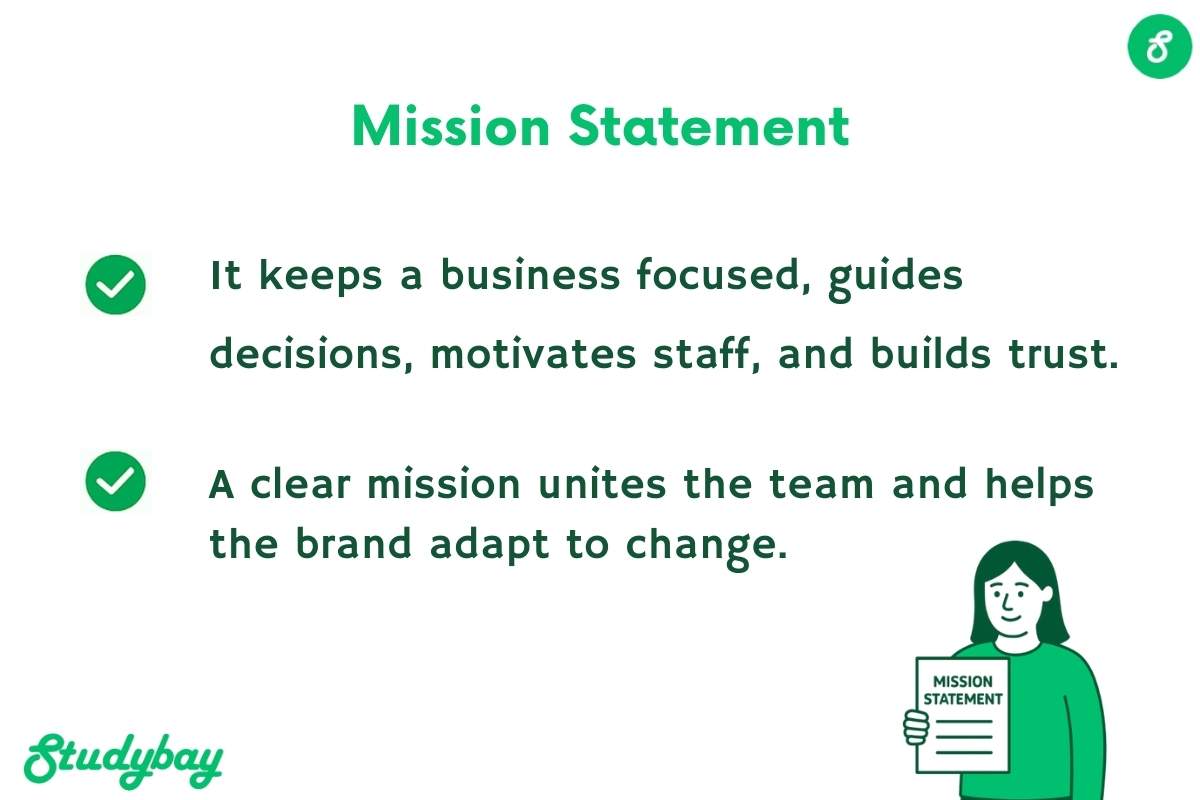
Every firm, from a small startup to a big corporation, requires a way to stay on track. A mission statement gives your workforce a reason to come to work every day and lets the outside world know what makes your firm important. Without one, you could make choices that seem excellent at the time but don't help you reach your bigger goals.
If you want to know how to write a mission statement, the first step is to be clear. A well-written statement keeps your plan on track, helps employees see how their work fits into the wider picture, and gives customers a reason to trust your brand.
Tim Berry, a well-known business planner, says that mission statements "help set the direction and define the business in simple terms." This clarity is especially helpful for founders when their business is growing quickly or when they are going through changes.
Your mission statement should guide you throughout times like rebranding, changing direction, or launching a new product. It brings your team together over common goals, calms stakeholders, and confidently communicates purpose. The stronger and clearer it is, the better your brand can handle changes in the market and other problems.
Who Should Be in Charge of Writing the Mission Statement?

As a founder, you might feel like you have to develop the mission statement solo, but the truth is that it works best when everyone works together. In most companies, the founder or leadership team establishes the first direction. However, they ask for advice from stakeholders like board members, department heads, or even long-term employees. This makes sure that the statement shows both the original vision and the truth about how the firm really serves its clients.
Getting people from different parts of the firm to speak up helps everyone get on the same page. Planning organizations like The Compass offer workshops or guided sessions that assist teams come up with their goals and priorities together.
Instead of being a personal ideology for one leader, the result is a goal statement that feels real and welcoming. When your employees see their values and points of view in the final form, they are more inclined to support it in their everyday work. This makes the statement a live aspect of your brand instead of just words on a paper.
When to Write or Change Your Mission Statement
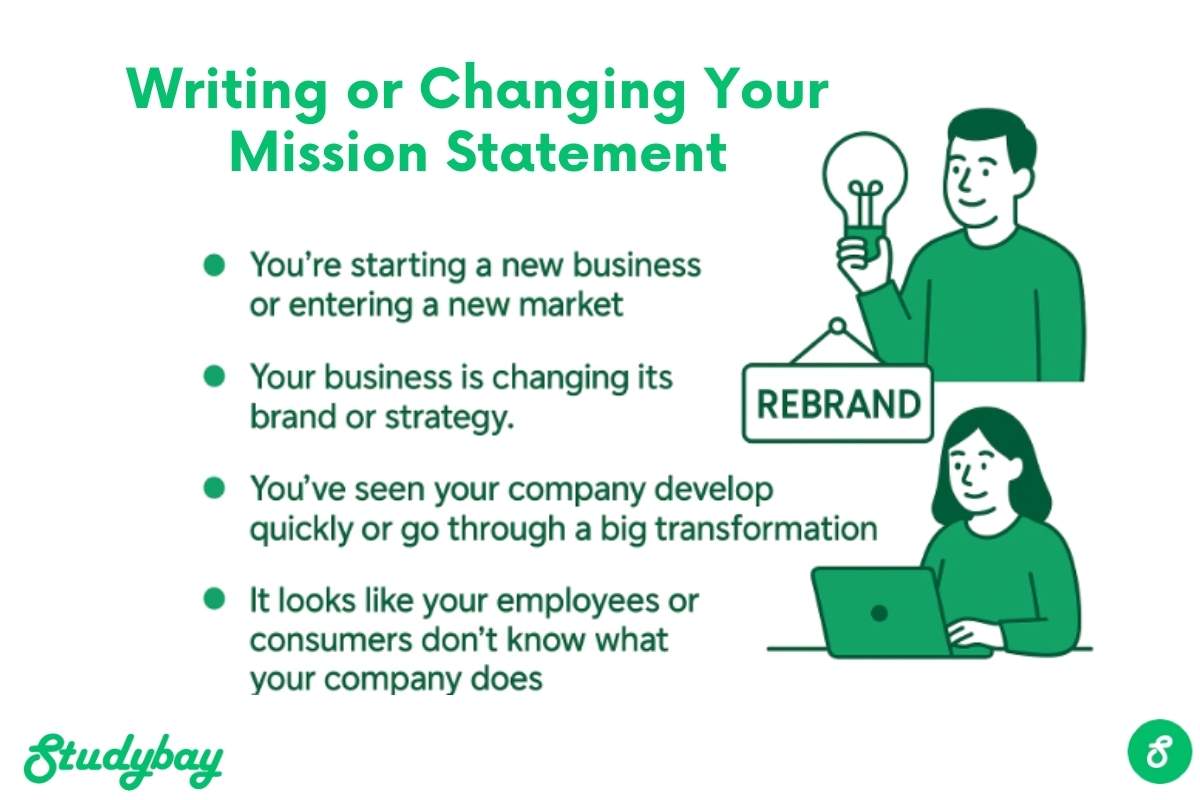
The greatest time to write your mission statement is when your business is just getting started. It gives entrepreneurs a clear goal to aim for before they get lost in their everyday tasks. It's especially useful for established firms when they go through substantial changes, like a rebrand, a big round of funding, or a change in product strategy.
In each scenario, the mission statement serves as a stable base that helps you tell people inside and outside of your organization what it stands for.
But it's a mistake to write it once and never look at it again. BoardEffect and other experts say that you should look over your mission statement at least once a year to make sure it still fits your life. Your mission should change as the market changes, as customers' requirements change, and as your company's goals change. Use this short list to help you decide if it's time to make changes:
- You're starting a new business or entering a new market
- Your business is changing its brand or strategy.
- You've seen your company develop quickly or go through a big transformation.
- It looks like your employees or consumers don't know what your company does.
Going over your mission statement often makes sure it stays relevant, true, and motivating for both your team and your audience.
How to Write a Mission Statement in Steps

You're not the only one who has ever felt that you couldn't put your whole business into one statement. But there is a simple way to do it. The easiest method to learn how to write a mission statement is to break it down into small, easy-to-follow steps.
First, you get the right people and information. Then you figure out who your audience is, what you do, why you exist, how you give value, and ultimately, you polish the draft into a finished product.
You start with vague notions and work your way up to a statement that is both memorable and useful. We'll go over this framework in detail in the next sections so you can write a mission statement that clearly and confidently portrays your brand.
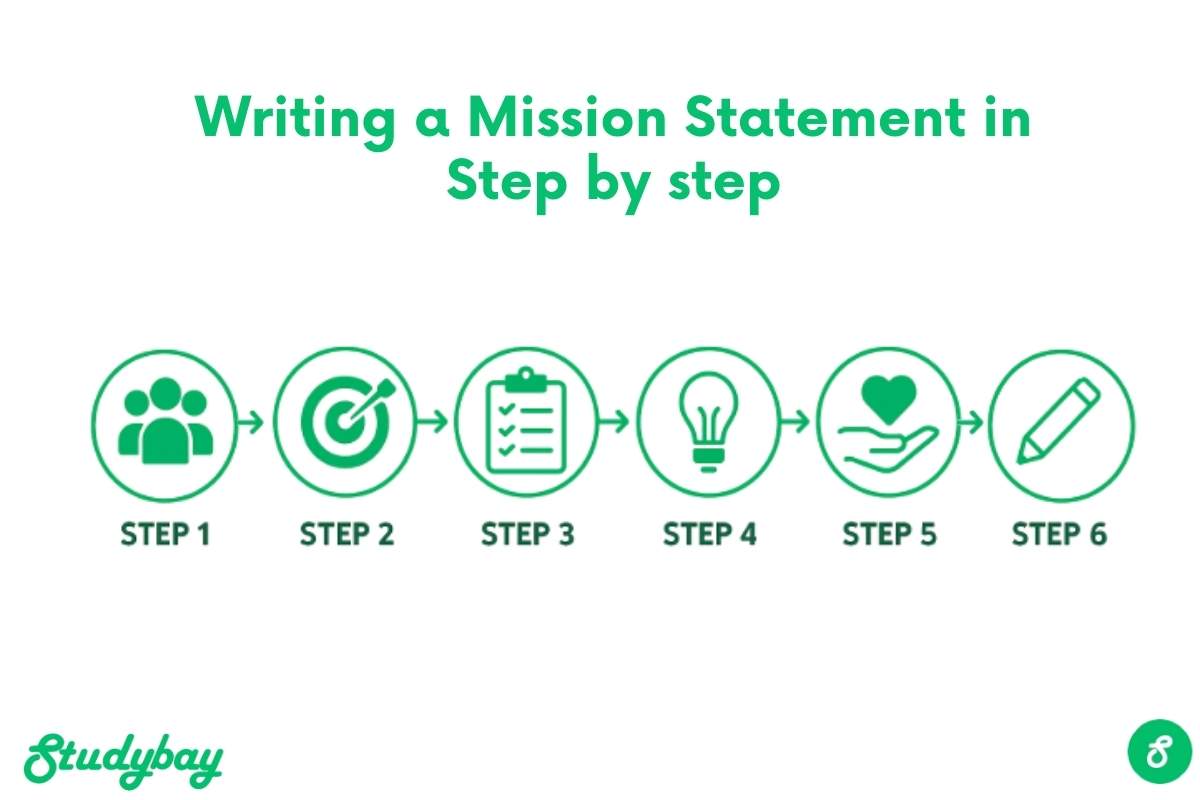
Step 1: Get Information and Stakeholders Together
Photo by Ivan Samkov: https://www.pexels.com/photo/group-of-people-studying-together-5676744/
Before you write anything, make sure you have the proper people and the correct setting. Bring together the founders, important leaders, and team members who have different points of view on your firm. Customer feedback can also be helpful.
This early work together brings out the stories, thoughts, and values that should be at the heart of your mission statement. Share your background research, talk about your company's history, and get feedback on what matters most, much like you would in a workshop.
The more people you include, the more real and important your statement will seem. At this point, you need to do a lot of planning so that you can write a mission statement that accurately reflects both your initial goal and your current situation.
Step 2: Figure Out Who Your Audience or Customers Are
A mission statement is only useful if it says who you help. Before you start writing, take some time to think about who your main audience is. This could be paying clients, people who benefit from your nonprofit, or a certain community.
Don't just describe them on the surface; think about their needs, problems, and ambitions. For instance, a healthcare business might help "patients looking for affordable access to care," while an education organization might help "students from underserved communities."
Knowing who you're writing for helps you stay on track with your goal statement and stops it from becoming overly general. By figuring out who benefits from your work, you can make sure that your statement speaks to real people and clearly conveys its goal.
Step 3: Make It Clear What You Do
The next stage is to say exactly what you do for the people you serve after you know who they are. This section should be easy to understand and not full of buzzwords. Just think about your main product, service, or solution and explain it in simple terms.
For instance, instead of saying, "We offer cutting-edge technology solutions," you could say, "We make mobile apps that help parents keep track of how their kids are doing in school."
If you get rid of jargon, anyone—whether they're a consumer, an investor, or a new team member—will be able to understand your work right away. Being clear here makes you more trustworthy and lays the framework for connecting what you do to your deeper purpose in the next steps.
Step 4: Tell Others Why You Are Here
There is a deeper rationale for every product or service to exist. This level is all about figuring out what ideals you want to bring about and what changes you want to make in the world. Patagonia, for instance, doesn't only sell outdoor clothing; it also exists to protect the environment and get people to care about it.
A literacy nonprofit doesn't simply teach kids how to read and write; it also gives them the skills they need to achieve well in life. When you explain why you exist, you give your daily job a purpose that workers, customers, and partners can relate to. This greater "why" is what turns your mission statement from a list of things you do into a statement of how you will make a difference.
Step 5: Talk on How You Add Value
You can't just say what you do; you also need to describe how you do it in a way that makes you stand out. Your mission statement is different from those of your competitors because of how you plan to deliver value.
For instance, Southwest Airlines doesn't just fly people over the country; it makes air travel cheap and friendly. Warby Parker doesn't only sell spectacles; it also gives back through its "buy a pair, give a pair" initiative. It sells trendy glasses at a fair price.
You may show your audience what makes your brand special by talking about your method, whether it's great service, speed, innovation, or social effect.
Step 6: Write and Improve Your Statement
It's time to put your ideas into a comprehensive mission statement now that everything is in place. Don't stress about getting it right the first time; just write down a few drafts. After that, make your words simpler until they are clear, short, and easy to recall.
Give these drafts to trusted team members or stakeholders and ask for their thoughts. Do they think the statement is real, inspiring, and in line with your brand? Remove any jargon, extra words, and other unnecessary information until your mission fits easily in one or two sentences.
This approach of revising and testing your mission statement will make sure it is both strong and useful, ready to lead your organization into the future.
How to Find Out Whether Your Mission Statement Works
The next step after writing your mission statement is to make sure it does what it's supposed to do. A strong purpose should be clear, easy to remember, and motivating enough to get both your team and your audience excited.
The easiest approach to make sure this is true is to test it. Give it to staff, stakeholders, or even a few customers and ask them what they think. Keep working on it until it seems real and focused if it sounds hazy, confused, or easy to forget. Your goal statement should operate in real life, not simply on paper. Think of this as quality control.
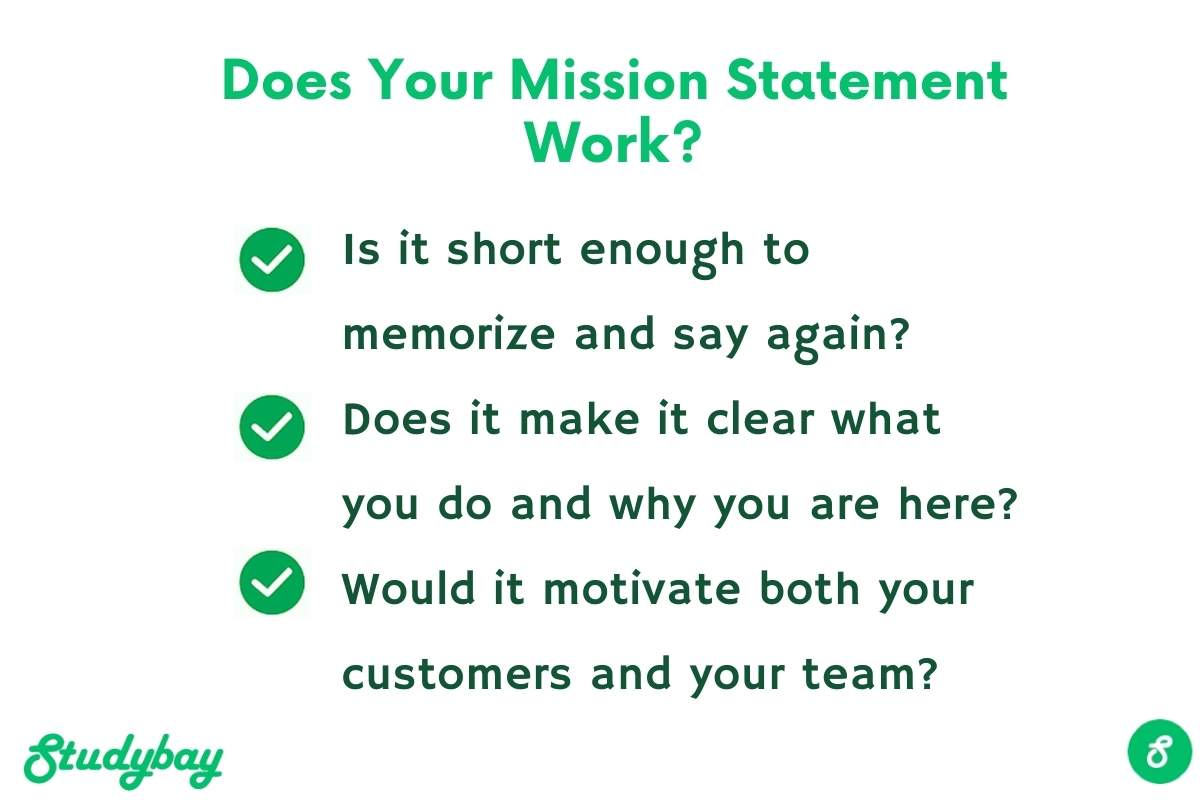
A Quick Checklist to Make Sure Your Mission Statement is True:
- Is it short enough to memorize and say again?
- Does it make it clear what you do and why you are here?
- Would it motivate both your customers and your team?
Things to Stay Away From
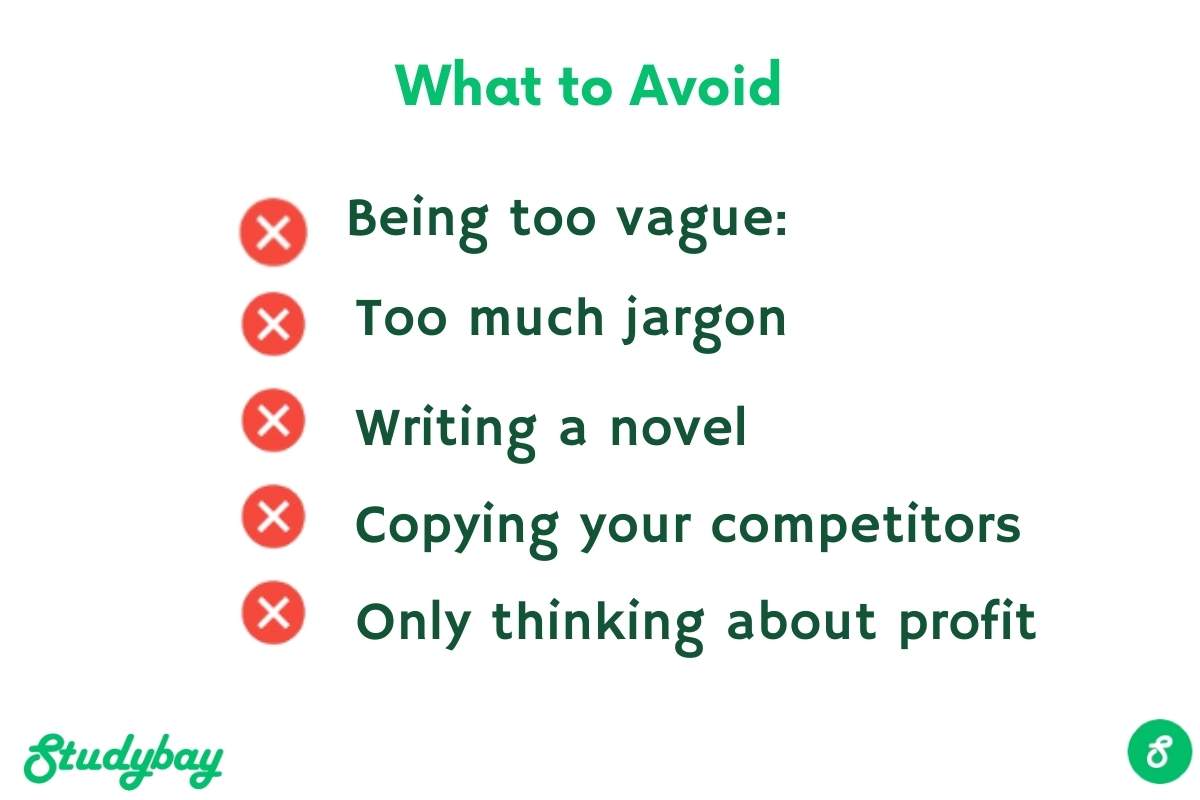
A lot of mission statements don't hit the mark, even when they mean well. They typically go on too long, are overly vague, or are full of jargon that doesn't mean much. To make sure your statement is forceful, stay away from these typical mistakes:
- ❌ Being too vague: "We want to be the best in our field." Better: "We help small businesses get accounting tools that are affordable."
- ❌ Too much jargon: Hard-to-understand words can turn people off instead of inspiring them.
- ❌ Writing a novel: Mission statements that are more than one phrase long lose their concentration; short statements have more impact.
- ❌ Copying your competitors: When you copy another company, your brand feels like it belongs to everyone.
- ❌ Only thinking about profit: A statement that doesn't talk about purpose and values doesn't usually get employees or customers excited.
If you stay away from these pitfalls, you'll come up with a mission statement that feels real, sticks in people's minds, and really helps your organization.
What Makes a Good Mission Statement
A good mission statement is short, simple, and true. It doesn't use jargon and gets its point over in a way that sticks with people and inspires them. There are a few things that all strong statements have in common: they make the organization's unique purpose clear, relate to values, and motivate people to act.
They are also flexible enough to let you make decisions about both short-term and long-term plans. Think of them like a compass: they're brief enough to remember yet strong enough to change the course of your business.
One thing that people don't pay enough attention to is the length of the mission statement. The sweet spot is usually between 12 and 25 words. This is short enough to be easy to remember and long enough to mean something.
In under 15 words, Sweetgreen sums up what the company does: "To inspire healthier communities by connecting people to real food."
The 17-word mission statement from Google, "To organize the world's information and make it useful and available to everyone," is well-known.
Warby Parker's objective likewise strikes a balance by integrating purpose and influence without going into too much detail.
These examples indicate that short, clear phrases stick in the minds of clients and in the daily culture of your organization.
Examples of Mission Statements by Industry
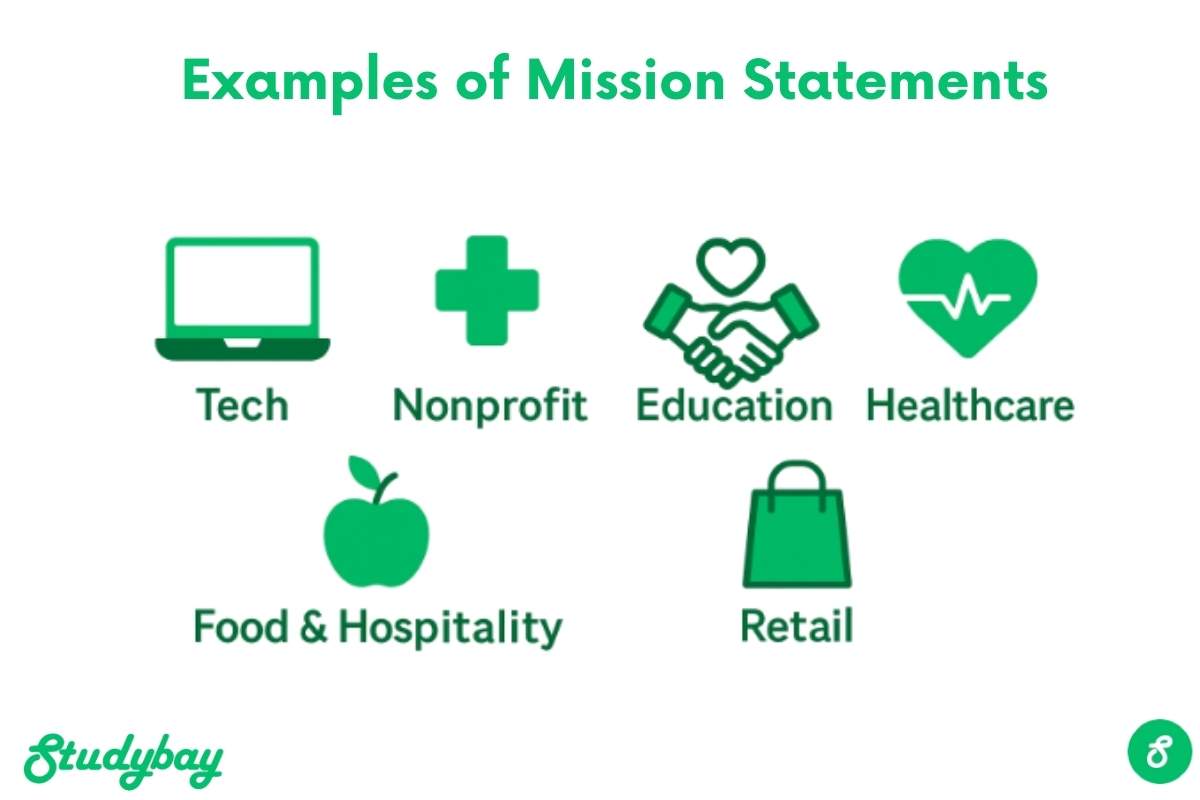
- Tech: Google's goal is "To organize the world's information and make it useful and available to everyone." Its strength is its simplicity and ambition. In just 17 words, it tells you what the company does (organized information) and why it exists (universal access).
- The American Red Cross says, "To prevent and alleviate human suffering in the face of emergencies by mobilizing the power of volunteers and the generosity of donors." This statement is effective because it clearly states the mission and how it will be carried out.
- Education: Khan Academy's goal is "To provide a free, world-class education for anyone, anywhere." This phrase is strong because it includes "anyone, anywhere" (accessible), "world-class" (quality), and "anyone, anywhere" (inclusivity). It talks directly to students and stresses how far it can spread around the world.
- Healthcare: The Cleveland Clinic states: "To provide better care of the sick, investigation into their problems, and further education of those who serve." This mission works because it balances patient care, research, and professional training, showing how the organization delivers value on multiple fronts.
- Food & Hospitality: Sweetgreen's mission statement, "To inspire healthier communities by connecting people to real food," is short and easy to remember. It does more than just sell salads; it connects the brand to the health and lifestyle of the community.
- Retail: Warby Parker says, "To offer designer eyewear at a revolutionary price, while leading the way for socially conscious businesses." This statement works because it combines a practical promise (affordable design) with a bigger value (social responsibility), giving customers more than one reason to connect with the brand.
These examples from different fields show how a well-written mission statement can capture both purpose and strategy. The best missions are clear, short, and have an effect, no matter what the field is—technology, nonprofits, or retail.
Tools for Making Mission Statements
Online tools can assist you in coming up with ideas and organize your thoughts when you're gazing at a blank page. They won't take the place of the serious thought that goes into a truly authentic remark, but they can help you get started. Take a look at these:
- Shopify Mission Statement Generator: This free tool makes short, one-line missions based on what you type in. It's quick and simple, but the outcomes are usually generic, so use them as drafts to improve.
- HubSpot's Generator: HubSpot has a refined tool that not only helps you come up with mission statements, but also gives you prompts regarding your values, goals, and target audiences. It's extremely helpful for companies that need more than one sentence of information.
- Notion AI: Notion's AI tools are known for being flexible. They can help you come up with a lot of different versions of your mission statement in just a few minutes. The good thing is that there are many options, but it may take more work to get your brand voice just right.
Other sites, such as Oberlo and Copy.ai, also offer rapid templates. The most important thing is to use these tools to get your creative juices flowing instead of as finished creations. Use their convenience and your own ideas to write a mission statement that feels like it's yours.
Questions and Answers About Writing a Mission Statement
How long should a mission statement be? Try to keep it short. The finest mission statements are between 12 and 25 words long. They are long enough to mean something and short enough to remember.
When do I need to make one? The best time to do this is when your company starts, but you should also do it again when big changes happen, like a rebrand, a pivot, or a period of high development.
Who should help write it? Founders usually lead the process, but getting your leadership team and even employees involved can help ensure sure the mission feels real and welcoming. Working together creates buy-in and agreement.
Is it possible for a mission statement to change? Yes. As your business and audience change, so should your mission. It stays useful and in line with your current goals if you look at it once a year.
What is the difference between a vision statement and a mission statement? A mission tells you what you do and why you do it. A vision is a picture of where you wish to go in the future. These three assertions, along with your fundamental beliefs, make up the core of your brand identity.
Is It Possible for a Mission Statement to Be Too Bold or Controversial?
Bold mission statements can be eye-catching, but they also come with pitfalls. A powerful statement can motivate your team and bring in devoted customers, but if it seems too big or out of touch with reality, it could hurt your reputation. Finding the appropriate balance is important. Boldness should come from being real, not from making bogus promises.
Some brands do really well when they are daring. Tesla wants to "speed up the world's shift to sustainable energy," which is a big goal but still possible given the firm spends a lot of money on renewable technologies.
On the other hand, a startup that says it would "end poverty worldwide" may sound good, but people may not believe it unless it does anything to back it up. People may pay attention to controversial statements, but they only work if your organization always keeps its word.
When in doubt, pick boldness if it aligns with your genuine values and abilities. Don't use language that sounds like hype for the sake of hype. The best mission statements are those that keep your brand grounded in what you can actually do while still pushing it toward a better future.